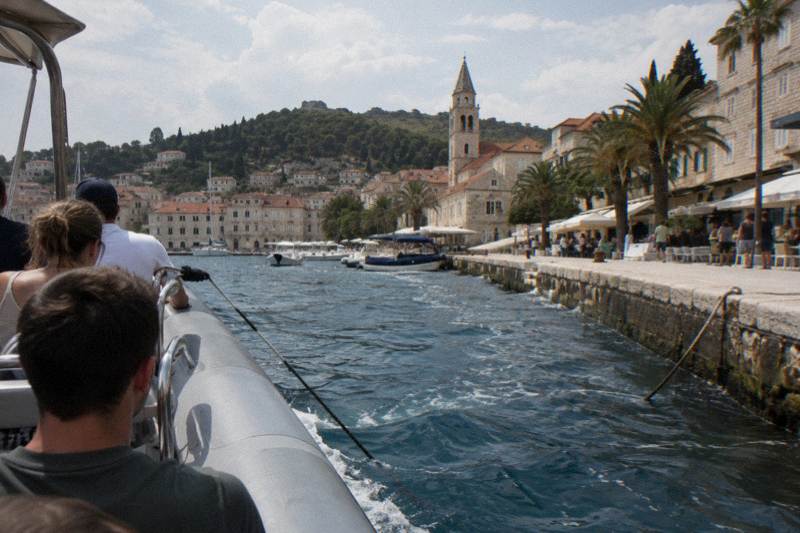
Why Is The Blue Cave Blue, And Why Does The Colour Change?
The science behind the famous silver-blue glow in Croatia's Blue Cave on Biševo, and why the hour, season and sea state change what you see.
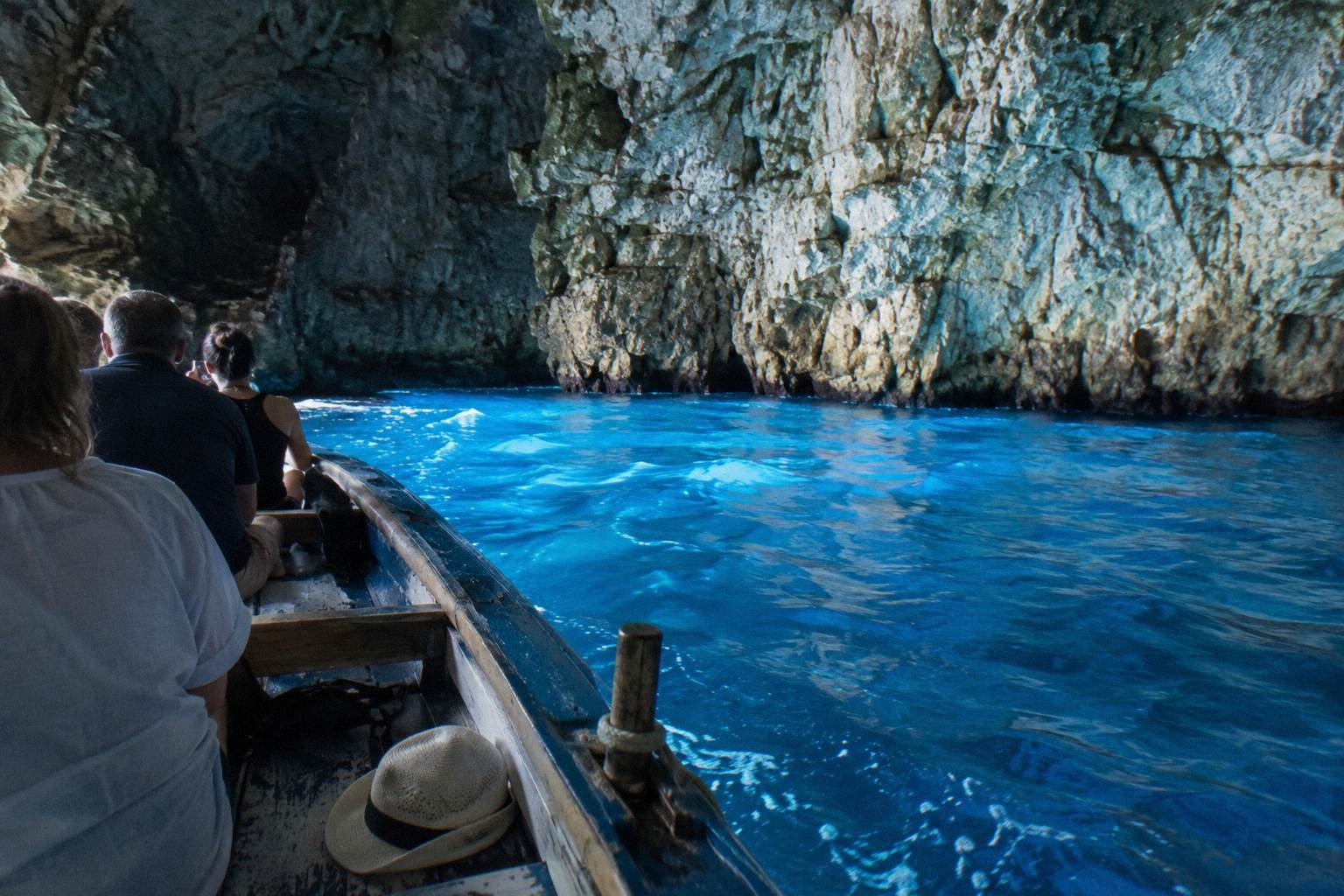
In short: the Blue Cave (Modra špilja) on the island of Biševo glows because sunlight reaches the cave chamber through an opening beneath the sea surface. Water absorbs the red end of the light spectrum first, so the light that arrives inside is mostly blue, and it reflects off the white limestone floor into the water and onto the walls. The colour changes because the intensity of that light depends on the height of the sun, the season and the state of the sea. The official guidance is that the best light is generally between 10:00 and 14:00, season dependent. Nothing about the colour is guaranteed on any given day.
This is a deeper dive than the planning pages: if you want the practical side, see how a Biševo Blue Cave visit works and the best time of day to visit the cave.
The cave is blue because its main light source is not the sky but the sea. Sunlight enters through a submerged opening, the water strips out the red and yellow wavelengths on the way in, and the surviving blue light bounces off the pale rock floor and fills the water with the famous glow. The colour changes with the hour, the season and the sea state, because each of those changes how much sunlight reaches that underwater doorway.
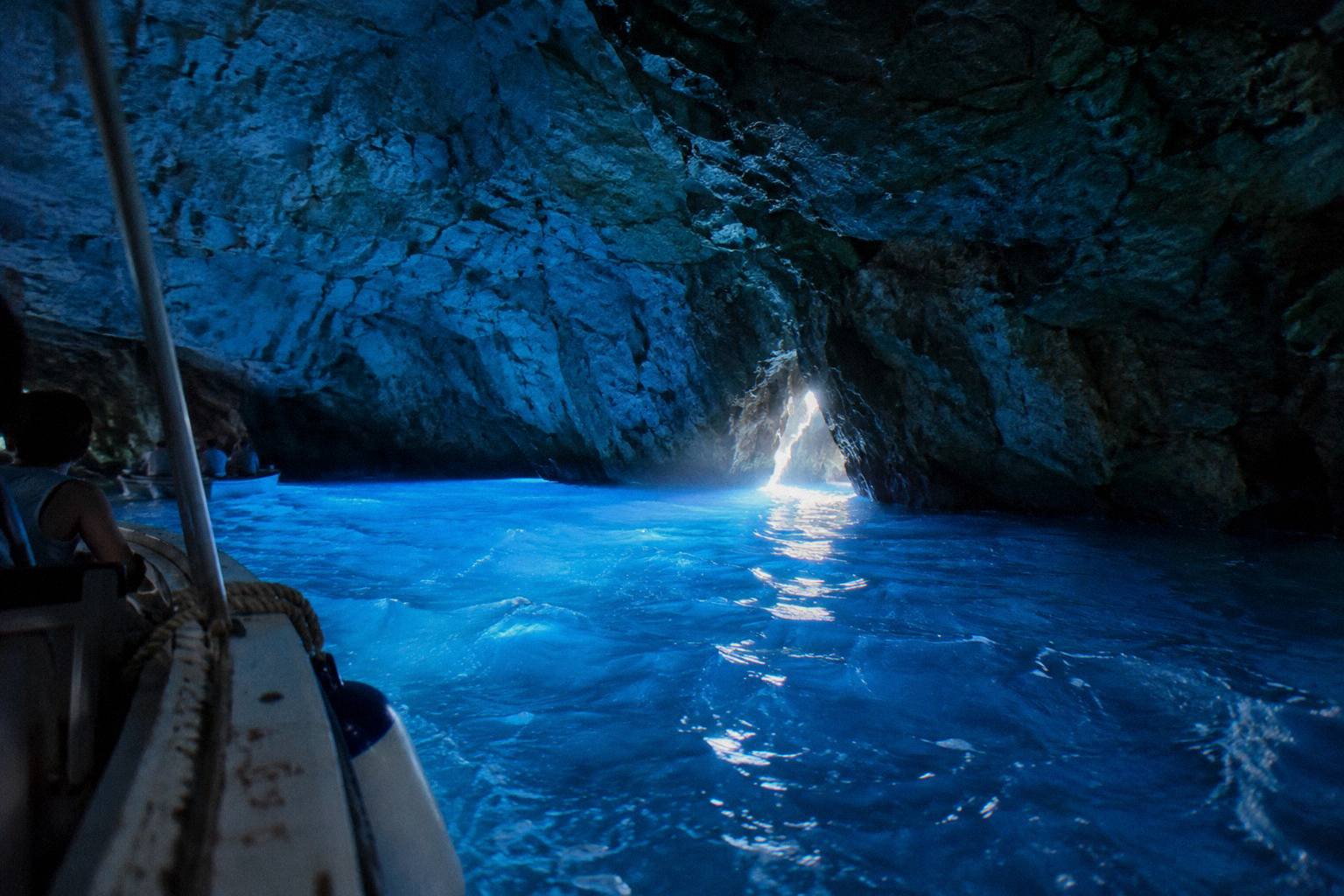
Start with the geometry. The Blue Cave sits on the east side of Biševo island in Balun bay, about 4.5 nautical miles (8.3 km) from Komiža, as the Komiža tourist board's official page describes. The chamber is small: roughly 10 to 12 m wide and 24 m long. The entrance visitors pass through is only 1.5 m high and 2.4 m wide, which is why everyone comes in on a small boat. The same chamber has a second, deeper opening below the waterline, and that submerged entrance is the one that matters for the colour.
Ordinary daylight is a mix of wavelengths, from red at one end of the spectrum to violet at the other. When sunlight travels through even a modest amount of clear seawater, the water absorbs the longer red, orange and yellow wavelengths far faster than the shorter blue ones. What comes out the other side of that underwater opening is light that has been filtered towards blue. Inside the cave, that blue light hits the bright, pale limestone floor and reflects upward, so the water itself appears to glow rather than merely look dark. This is general optics, the same reason deep clear water looks blue from above, but here the effect is concentrated into one small room with white walls.
The rock and the water are not blue themselves. There is no mineral, dye or organism responsible. The glow is entirely borrowed light, which is the first clue to why it never looks identical twice: change the incoming sunlight and you change the whole room.
The colour changes for three main reasons. First, the hour: when the sun is low, little light reaches the underwater opening at a useful angle, and the cave reads as ordinary dim grey rock. Near the middle of the day the sun is high, more light gets through the water, and the blue intensifies. The official guidance from the Komiža tourist board is that the best light is generally 10:00 to 14:00, season dependent. Second, the season: the sun's midday height over Croatia drops between summer and the edges of the season, so the same 12:00 slot in May is not identical to 12:00 in August. Third, the sea state: choppy or cloudy water scatters and dims the incoming light, and in wind and swell the cave can close altogether because the small-boat entry becomes unsafe.
None of this is a promise. A midday ticket in high season is the best bet on paper, but no visitor is guaranteed a particular shade, a silver effect or even entry. If you are weighing how the timing question feeds into choosing a departure, the tours below are the ones whose itineraries put the Biševo cave in the middle of a longer day.
What Time Of Day Gives The Blue Cave Its Best Light?
Around the middle of the day, roughly 10:00 to 14:00, season dependent, a range that comes from the official Komiža tourist board page rather than from tour marketing. The higher the sun, the more light penetrates the sea and reaches the cave's submerged opening. Early and late visits happen, but the glow is usually weaker, and no operator can promise a specific colour at a specific hour.
Think of the underwater entrance as a window with a very wide sill. When the sun is low in the sky, its light hits the sea surface at a shallow angle, much of it glances off, and what does enter the water arrives at the window obliquely and dimmed. When the sun is near its peak, light drives down through the water more directly, the window fills, and the reflected blue off the cave floor is at its strongest. That single physical relationship is the whole reason the midday slot is prized.
The season modifies the same picture. Croatia's sun stands highest in late June and noticeably lower in April, May, late September and October, which are all inside the cave's roughly April to October season. So a 13:00 visit in August and a 13:00 visit in October share a clock time but not a sun angle. The official wording, "generally 10:00 to 14:00, season dependent", is doing careful work: it gives the reliable window while admitting that the window shifts with the calendar.
The main variables, and what each one does to the light, are worth keeping in one place:
| Variable | Effect on the blue light | What you can do about it |
|---|---|---|
| Hour of day | Low sun means dim, grey-blue water; the glow builds towards midday | Choose a departure that reaches Biševo between about 10:00 and 14:00 |
| Season | The midday sun is lower in spring and autumn than in high summer, softening the peak | Expect a slightly different shade at the edges of the April to October season |
| Cloud cover | Thick overcast cuts incoming sunlight and flattens the effect even at midday | Little; rely on the 24-hour free-cancellation window if a storm day is forecast |
| Sea state | Choppy water scatters and dims the light; in wind and swell the cave can close | Book a multi-stop day so a closure does not waste the trip |
Sea and sky conditions layer on top of all of this. A bright, calm day at midday is the best-case setup; an overcast midday or a stirred-up sea dims everything regardless of the hour. And when wind or swell make the 1.5 m entrance unsafe, the cave closes, at which point the colour question is moot. How that plays out for your booking is covered in what happens when the Blue Cave is closed for bad weather.
The practical consequence for choosing a tour is that departure time matters more than most people expect. The long shared days from Split and Trogir, such as the Mamma Mia Stop, 10-12 Hours tour from Providenca Travel & Charter (from €120 per person, rated 4.8 across 8,983 reviews) or the TOTO Speedboat, 5 Islands day from TOTO TRAVEL - Boat Trip Adventures (from €109 per person, rated 4.9 across 3,414 reviews), are built to reach Biševo in the late-morning-to-early-afternoon band before continuing to Hvar and the smaller islands. The exact timing on the day is the operator's, but the shape of the itinerary follows the light.
Why Does Sunlight Turn Blue Underwater?
Because water is a filter, and it is a biased one. Clear seawater absorbs red, orange and yellow wavelengths of sunlight far more readily than blue and violet ones, so light that has travelled even a short distance underwater arrives depleted of everything except blue. The Blue Cave concentrates that filtered light into one small chamber with a pale floor to bounce it off, which is why the effect is so vivid there and unremarkable in open water.
It helps to separate two things people often confuse: scattering and absorption. The sky is blue mainly because air molecules scatter short wavelengths sideways. The sea is blue mostly for a different reason: water molecules absorb long wavelengths, removing red from the mix and leaving blue to be scattered back to your eye. In the cave, absorption is the dominant process. Every metre of water between the surface and the submerged opening subtracts more red and yellow, so the "daylight" that finally enters the cave is pre-filtered, as if the sun were shining through blue glass.
The pale limestone interior is the second half of the trick. Blue light entering the chamber hits the light-coloured rock floor and walls, which reflect most of it back into the water. From a boat, your eye sees that reflected light through the water column, and the whole surface of the cave pool appears to emit blue light rather than reflect the sky. It is borrowed sunlight, tinted by the sea and returned by the rock. Read more about the island itself at Biševo on Wikipedia if you want the wider geography.
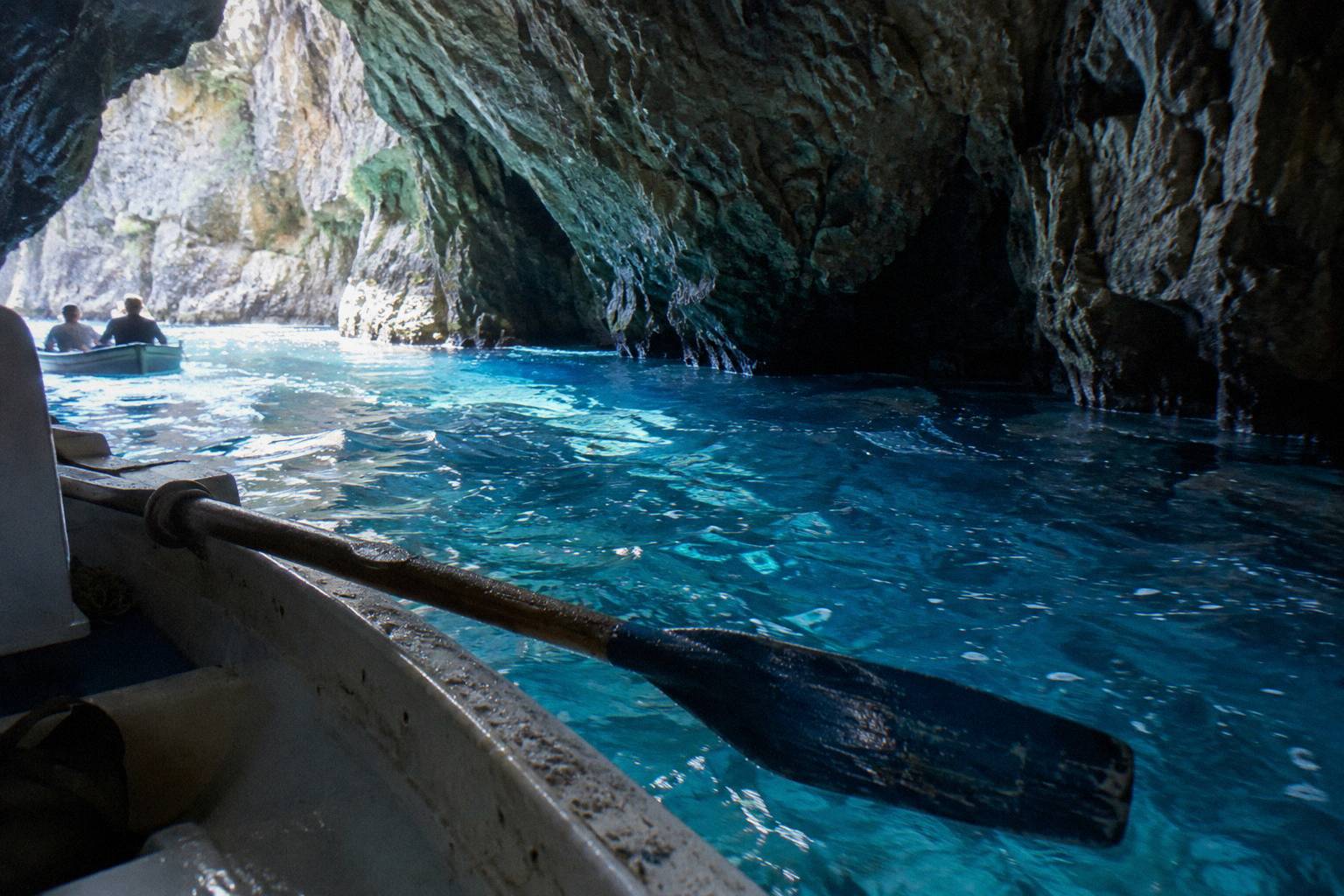
A natural question is whether this is unique. Sea caves with submerged openings exist elsewhere, and a handful produce similar glows, but the combination at Biševo is unusually good: a small chamber, a very white floor, an underwater entrance on the sunny side and an above-water entrance small enough to keep direct daylight from washing the effect out. The concession's own site runs the visits, and about 50,000 people a year come to see the result.
One caution worth stating plainly: photographs oversell it. Cameras with long exposures in dark interiors pull out more colour than the eye does, so expect a glow that is real and striking but softer than a brochure. And because the effect is filtered daylight, anything that dims the daylight dims the glow: cloud, choppy water, a low sun. The cave does not have a colour of its own to fall back on.
Why Does The Colour Change Between Morning And Afternoon?
Because the sun moves. The intensity and angle of the light reaching the underwater opening change continuously through the day, so the same cave is dim and grey-ish early, brightest near midday, and fading again by mid-afternoon. Add changing sea conditions and no two visits, even on the same day, see exactly the same shade.
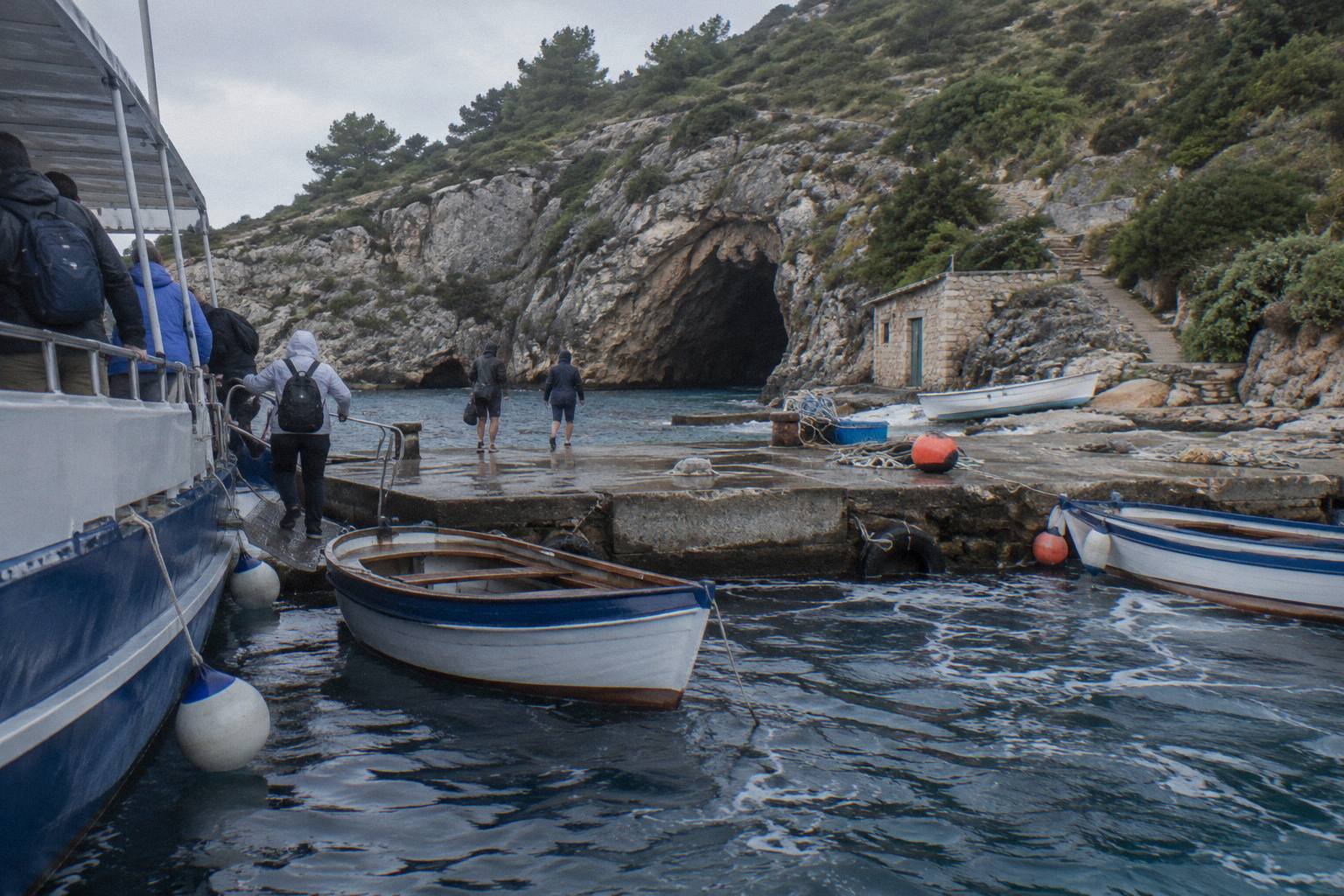
Morning visits tend to surprise people in the wrong direction. The cave is open, the boat goes in, but with the sun still low the blue is thin and the chamber reads as a plain dark grotto. By late morning the glow builds, peaks somewhere in the official 10:00 to 14:00 window, and then declines through the afternoon as the sun drops and its light strikes the sea at a shallower angle. The change is gradual rather than a switch flipping, but the ends of the day are visibly weaker than the middle. More of these guides are collected on Blue Cave Tour Croatia.
There is a second, subtler factor: the color of the water itself. Calm, clear water transmits blue light efficiently. Water that has been stirred up by wind or boat traffic scatters light and muddies the transmission, so the glow desaturates even under a midday sun. This is one more reason the sea state matters beyond the simple open-or-closed question.
If you are booking a shorter day where timing is tighter, Hvar departures are the interesting case. The Vis Island Stop, 7-8 Hours tour from Kabina Boats - Hvar Boat Tours (from €100 per person, rated 4.9 across 1,135 reviews) and the Pakleni Islands, 8 Hours trip from HvarBoats (from €95 per person, rated 4.9 across 670 reviews) both visit the Biševo cave as part of a compact day from Hvar town, which leaves more of the itinerary inside the bright hours. The guide to trips from Hvar town compares the options in detail.
The afternoon question deserves its own honest answer. A departure that reaches the cave at 15:00 or 16:00 will still enter if the sea allows, and many summer afternoons still produce a respectable glow, but you are visiting outside the window the official page names. If the colour is the whole point of your day, weight your choice towards itineraries that put Biševo in the late morning or around noon.
Does The Weather Change The Colour Of The Blue Cave?
Yes, in two ways. Cloud and a rough sea both dim the glow, because both reduce the sunlight that reaches the underwater opening, and in stronger wind and swell the cave can close entirely when the small-boat entry becomes unsafe. A cloudy midday still beats a sunny dawn, but no weather condition guarantees a particular colour on the day.
Cloud cover is the straightforward case. The cave runs on daylight, and a thick overcast can cut the incoming light enough to flatten the effect even at the perfect hour. Thin high cloud matters less; heavy rain cloud matters a lot. The colour does not vanish, it just loses the intensity that makes people gasp.
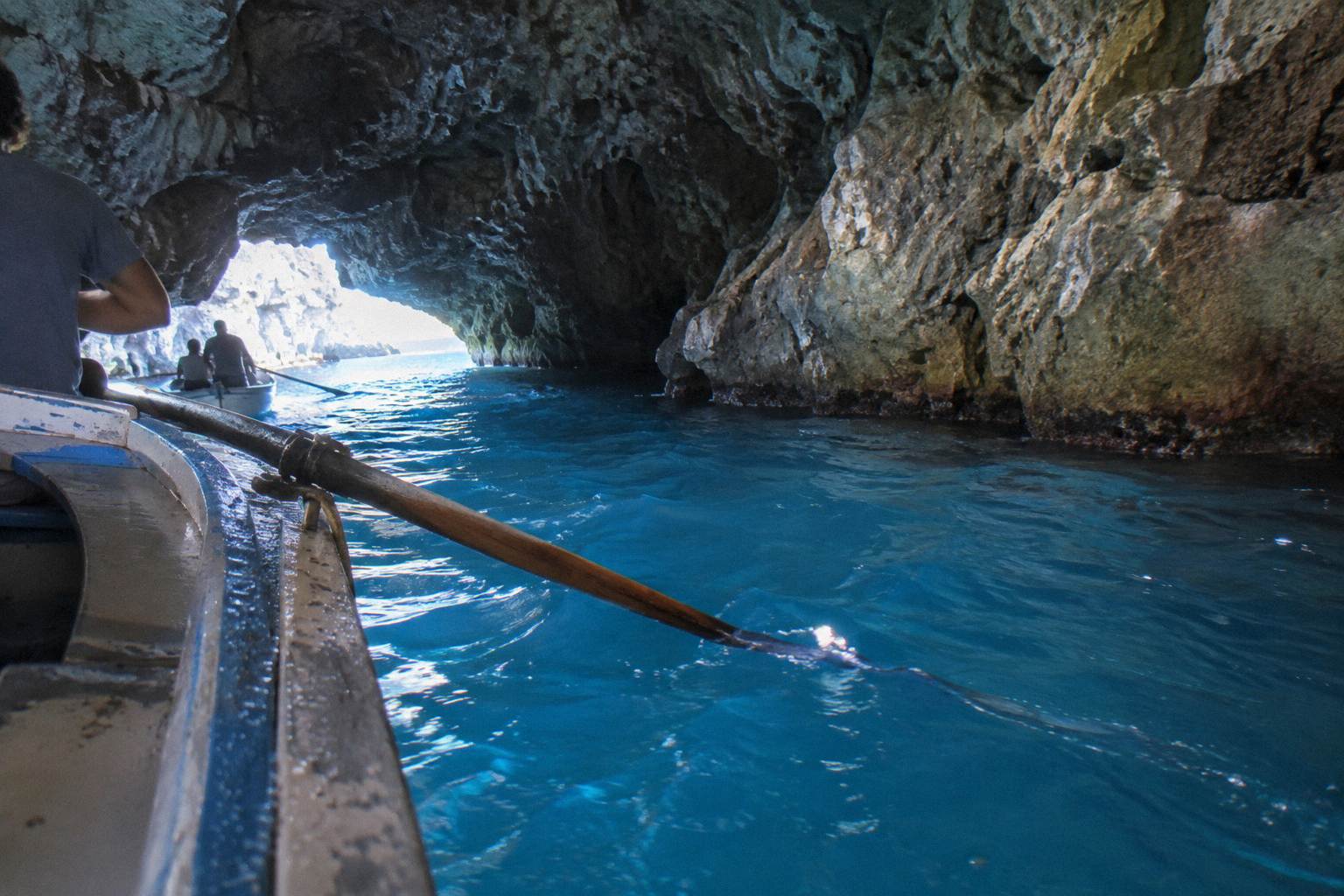
The sea itself is the bigger variable. The entrance visitors pass through is 1.5 m high, entered by small boat, so the whole operation is sensitive to swell. When wind or waves make that entry unsafe, visits stop, and there is no published threshold at which that happens: the decision is made on the day by the people running the boats. The honest phrasing is that the cave can close in wind and swell, and any booking carries that possibility. Tour operators typically adapt the itinerary, substitute other stops or offer alternatives per their own terms, and free cancellation windows of 24 hours apply on the tours named in this article, but no operator can promise a cave visit.
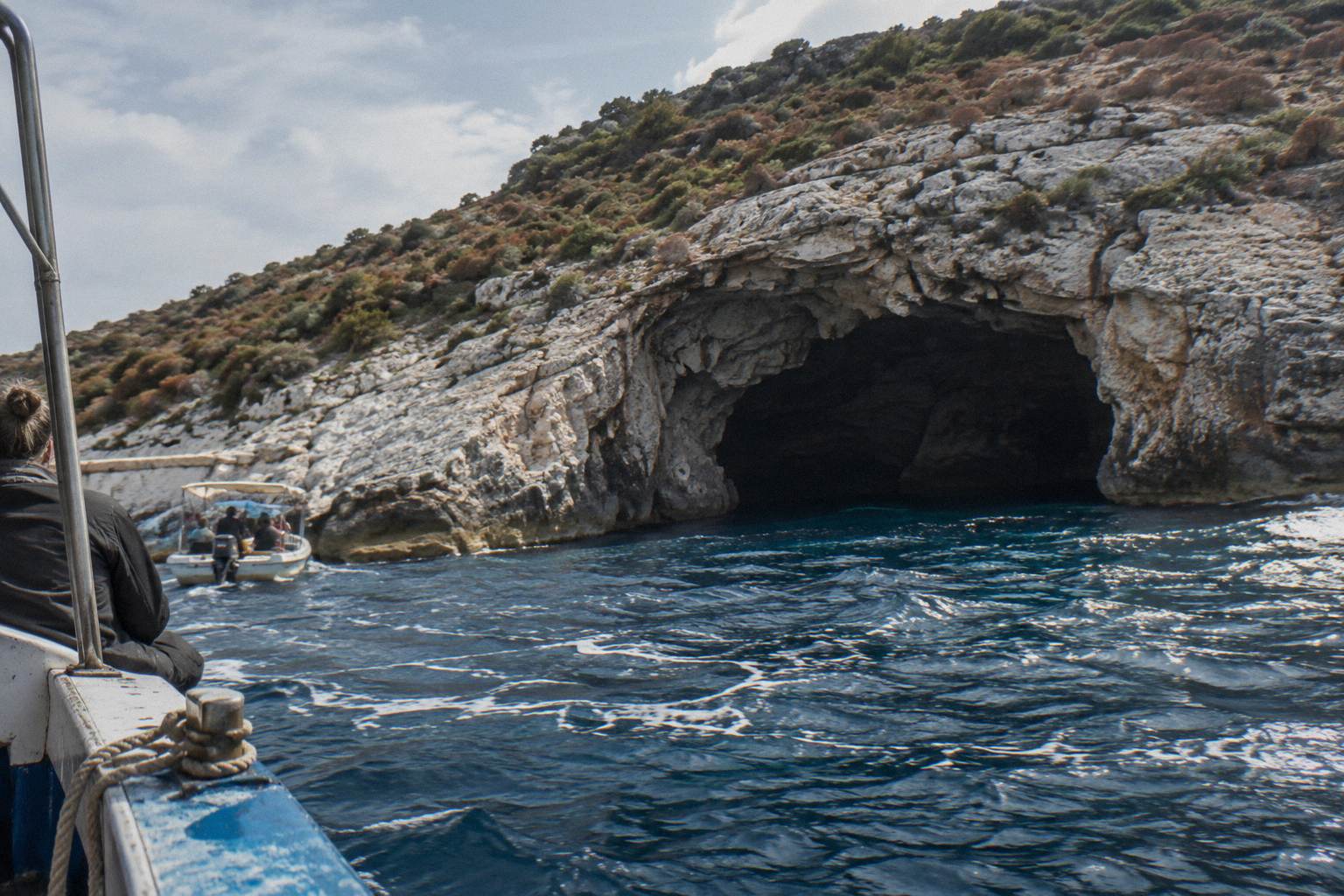
Weather also shapes the water's clarity, which feeds back into the optics. A calm, settled spell lets the water clear, and clear water carries blue light deeper and brighter. After several windy days the water near the surface holds more suspended material, and even a sunny midday looks muted compared with a calm one. Visitors who come in the middle of a stable high-pressure period usually see the cave at its best, though nobody can arrange that in advance.
One structural note for anyone planning around the weather: the long shared days build in several stops, so a cave closure does not waste the whole outing. The Mayer Charter 5 Islands Day (from €110 per person, rated 4.9 across 6,711 reviews) and the Base Fare 5-Island Day from Valiant d.o.o - travel agency (from €78 per person, rated 5 across 3,304 reviews) both carry Hvar, swim stops and smaller islands alongside Biševo. A private boat gives the most flexibility to reshuffle the day; the private-vs-group tradeoffs are covered in private versus group Blue Cave tours.
Is The Dubrovnik Blue Cave The Same Phenomenon?
No, and the distinction matters. The Blue Cave near Dubrovnik, in the Elaphiti islands around Koločep, is a different cave from the Biševo one. The Dubrovnik-area cave is a swim-in grotto with no entry ticket charged by the listed tours, while Biševo's Modra špilja forbids swimming, bathing and diving and charges about EUR 18 to 24 for adults by season, paid separately on most tours.
Both caves trade on blue light filtered through seawater, but they are entirely separate places with separate rules. The Biševo cave is the famous one: discovered in 1884 by Baron Eugen von Ransonet, protected since 1951 and reported as a geomorphological monument of nature, sitting in an archipelago recognised as a UNESCO Global Geopark (the cave itself holds no separate UNESCO status). Its code of conduct, published by the concession operator, forbids swimming inside, and everyone enters on the concession's small boats after larger boats stop at Mezuporat cove.
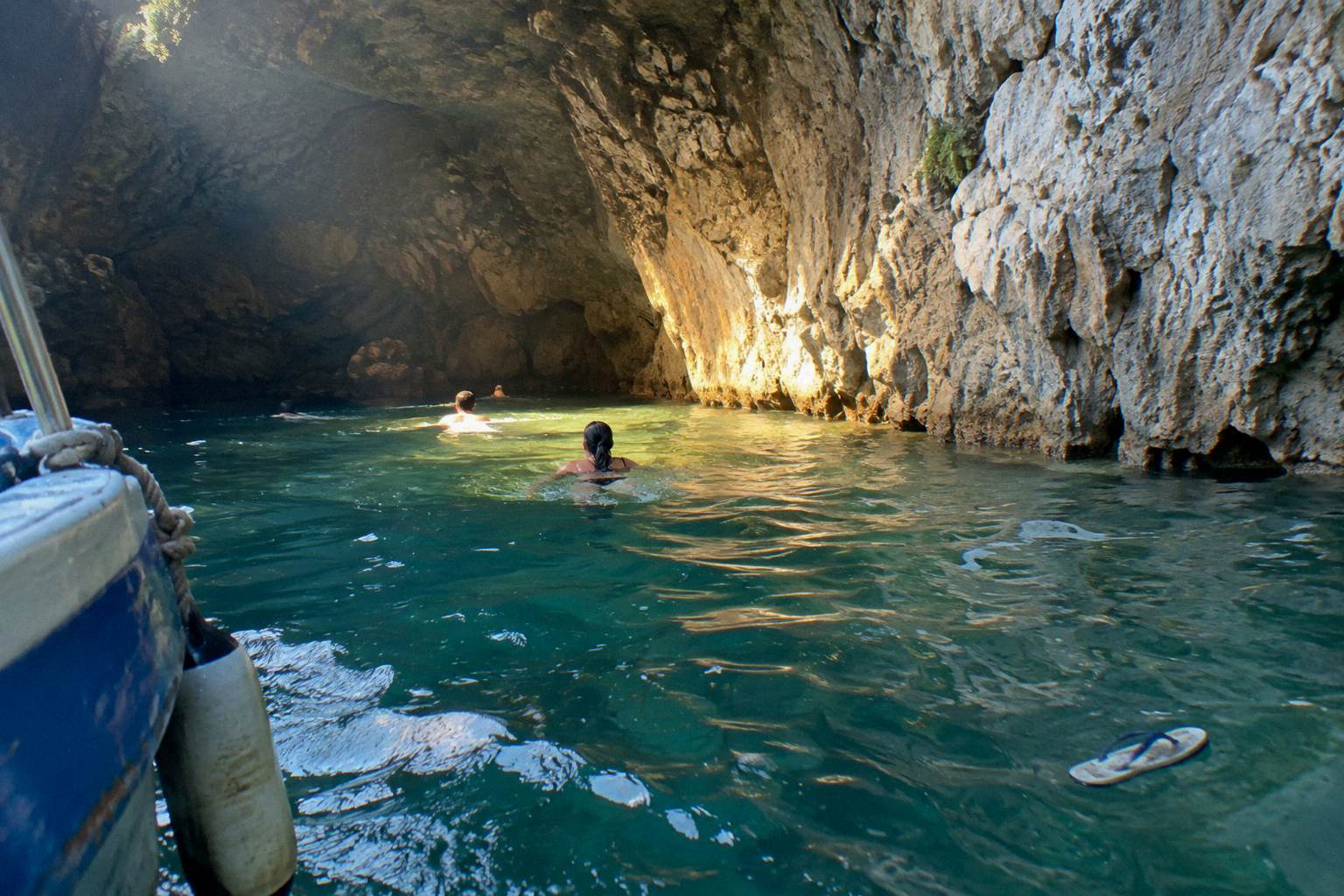
The Dubrovnik-area cave, by contrast, is a swim-in stop on short boat trips from Dubrovnik. There is no official page for it and no entry fee charged by the tours that visit it, and guests typically swim into the grotto with a mask. The glow is smaller in scale, and the experience is a quick stop on a half-day trip rather than the centrepiece of a ten-hour crossing. If your base is Dubrovnik and you are wondering which one you would actually see, this guide to the cave from Dubrovnik sorts it out.
The Dubrovnik-side options in the tour line-up are short: the Small Group, Sunj Beach, 4 Hours trip from Dubrovnik Islands Tours (from €70 per person, rated 4.9 across 13,342 reviews, the most reviewed trip covered here), the Budget Blue And Green Caves trip from Dubrovnik Caves (from €40 per person, rated 4.9 across 201 reviews) and the Regina Maris Elaphiti Trip (from €55 per person, rated 4.9 across 1,609 reviews) all visit the Koločep-area cave. None of them visits Biševo, and none of them carries the Biševo ticket or its no-swimming rule, because it is a different cave with different rules.
Does The Colour Ever Look Silver?
People often describe the effect as silvery-blue, and on a bright, calm midday visit the reflected light off the pale floor can read that way, especially in photographs. But it is not a separate phenomenon and it is not a promised outcome: it is the same filtered blue light at high intensity, seen against white rock. On a dim day the same water looks flat blue-grey, and no tour can guarantee the bright version.
The "silver" descriptions come from the way high-intensity blue light off the white floor mixes with the ordinary daylight leaking through the above-water entrance. Where the two light sources overlap on the water surface, the eye reads a cool, metallic sheen. Photographs exaggerate it further, since cameras in dark interiors stretch the highlights. Treat silver as the best-case face of the same blue, not a different effect you either get or miss.
For readers whose interest in the science extends to the region, the surrounding Vis archipelago Geopark adds context for why this stretch of the Adriatic is geologically special, and the wider story is in why the cave is worth the long day. If the physics question leads you into practical ones, whether you can swim in the Blue Cave answers the rule the Biševo code of conduct sets.
The bottom line for planning is unchanged by the vocabulary: aim for the middle of the day, hope for sun and a calm sea, and book an operator with a sensible cancellation window so that a bad-weather morning costs you nothing. Every tour named in this article carries free cancellation with a 24-hour window, and the full comparison of the Split-side options lives in how to choose the best Blue Cave tour from Split.
Common Questions About The Blue Cave's Colour
Why Is The Blue Cave Blue, And Why Does The Colour Change?
The cave glows blue because its light arrives through an underwater opening, and seawater absorbs the red end of the sunlight spectrum on the way in, leaving blue light to reflect off the pale limestone floor. The colour changes because the amount of light reaching that opening depends on the hour, the season and the state of the sea; the best light is generally 10:00 to 14:00, season dependent.
What Time Of Day Is The Blue Cave At Its Bluest?
Around the middle of the day. The Komiža tourist board gives the best light as generally 10:00 to 14:00, season dependent, because a high sun pushes more light through the water to the cave's submerged entrance. Early and late visits still enter but usually see a weaker glow.
Is The Blue Colour Guaranteed On Every Visit?
No. The glow depends on sunlight and sea conditions, and the cave can close in wind and swell when the small-boat entry becomes unsafe. Cloud, choppy water and a low sun all dim the effect. No operator promises a particular colour on a given day.
Is The Rock Itself Blue?
No. The limestone is pale and the water is ordinary seawater. The blue is filtered sunlight, borrowed and reflected; there is no mineral, dye or organism producing it, which is exactly why it varies with conditions.
Does The Dubrovnik Blue Cave Glow For The Same Reason?
It works on similar optics, sunlight filtered through seawater, but it is a completely different cave near Koločep in the Elaphiti islands. The listed tours swim into it and charge no entry ticket, while the Biševo cave forbids swimming and charges about EUR 18 to 24 for adults by season.
Why Do Photos Of The Cave Look Bluer Than Real Life?
Cameras in dark interiors use longer exposures and lift the highlights, pulling more colour out of the glow than the eye perceives. The real effect is striking but usually softer than a brochure image, especially outside the midday window.