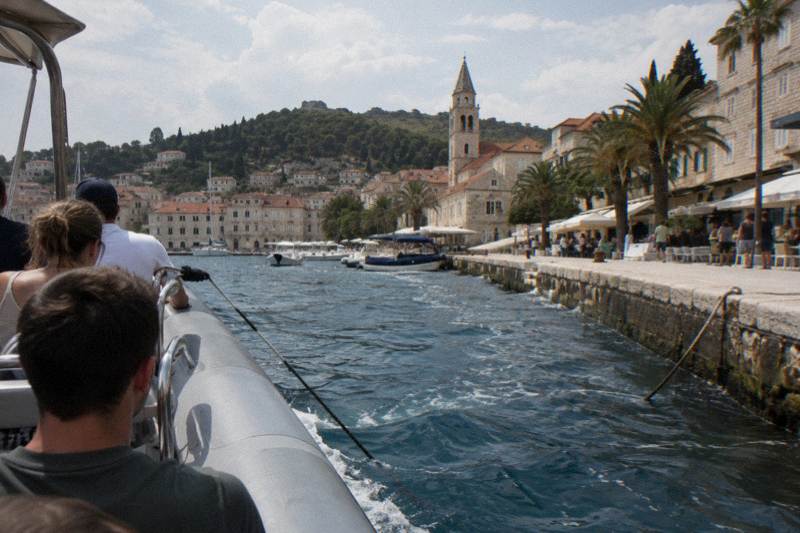
Best Time To Visit The Blue Cave: Hour, Month And Sea Conditions
Timing decides almost everything at the Biševo Blue Cave. The official light window is generally 10:00 to 14:00, the season runs roughly April to October, and the cave can close in wind and swell on any given morning. This guide lines up the hour, the month and the sea so the departure slot you book matches the experience you are paying for.
Short answer
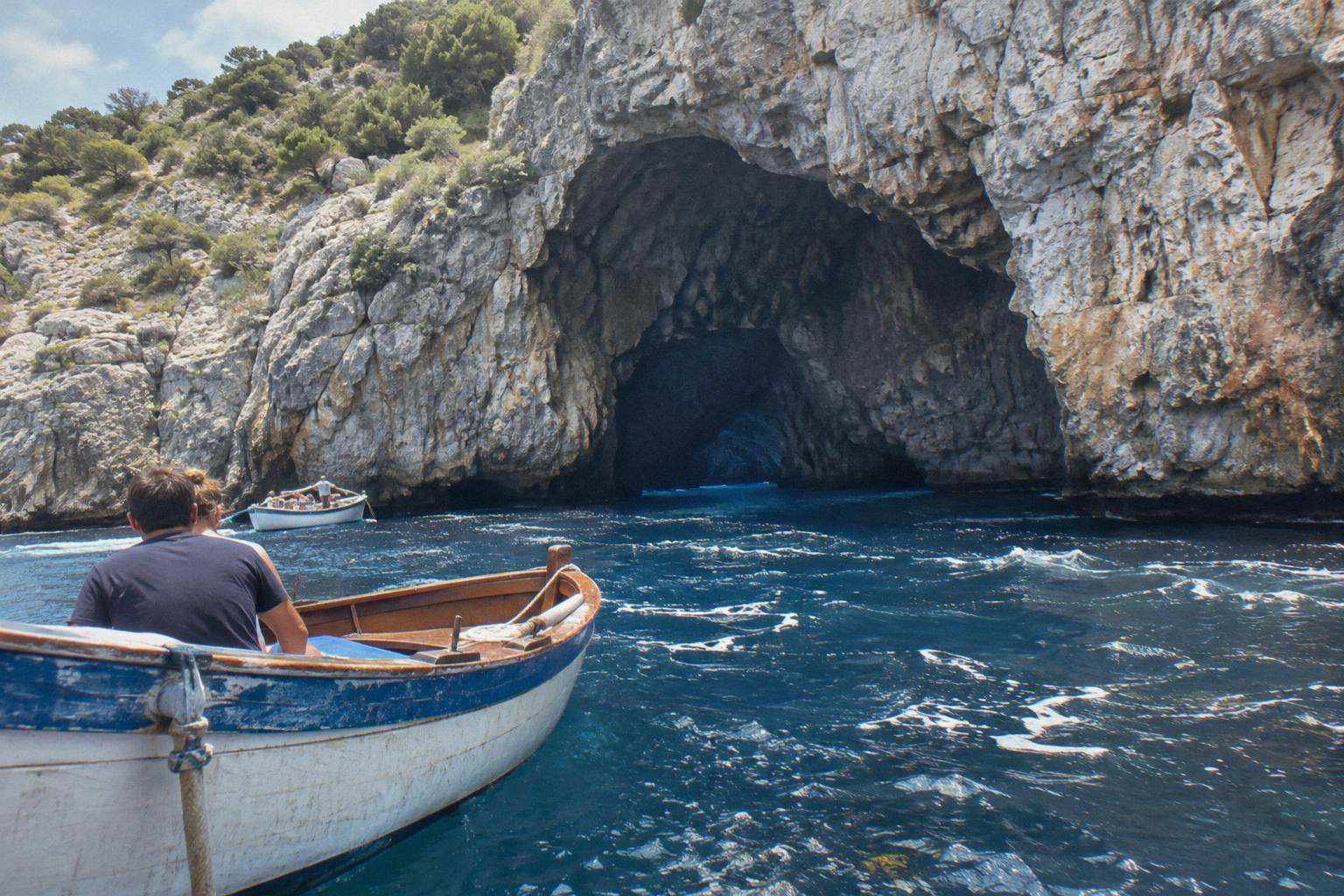
The best time to visit the Biševo Blue Cave is generally between 10:00 and 14:00, season dependent, within a season that runs roughly April to October. Tours from Split typically run 10 to 12 hours for the whole day, so a morning departure lines up with the light window. The cave can close in wind and swell, and no tour can promise a visit inside.
The Biševo Blue Cave, Modra špilja, draws about 50,000 visitors a year to the east side of Biševo island, 4.5 nautical miles (8.3 km) from Komiža. It has been open to the public since Baron Eugen von Ransonet discovered it in 1884, and the experience inside still depends on three things you partly control: the hour of your visit, the month of your trip and the state of the sea that morning. The Blue Cave Tour Croatia planning hub covers each of these in depth; this page puts them side by side so you can pick a departure slot with clear eyes.
For the mechanics of how a visit actually works, see the guide to how the Biševo Blue Cave visit works.
Quick Facts: Timing The Biševo Blue Cave
Plan your visit for late morning to midday on a bright, sunny day in the peak summer season, when sunlight streaming through the underwater opening fills the cave with its famous blue glow. Calm seas matter just as much as the clock, so book an early slot and keep a backup day in case weather cancels your trip.
| Item | Figure | Notes |
|---|---|---|
| Best light window | Generally 10:00 to 14:00 | Season dependent, per the official Komiža tourist board page |
| Season | Roughly 1 April to 31 October | Follows the ticket seasons |
| Cave ticket | About EUR 18 to 24 for adults | Season dependent; child 6 to 12 EUR 9 to 12, under 6 free; paid separately on most tours |
| Cave size | 10 to 12 m wide, 24 m long | Entrance 1.5 m high, 2.4 m wide, entered by small boat |
| Distance from Komiža | 4.5 nautical miles (8.3 km) | Balun bay, east side of Biševo |
| Annual visitors | About 50,000 | Official figure |
| Typical Split day tour | 10 to 12 hours whole-tour length | Includes crossing, island stops and swim time, not just the cave |
| Sea dependency | Can close in wind and swell | No official closure threshold is published |
One clarification before anything else: this page is about the Biševo cave off Vis. The Dubrovnik-area Blue Cave at Koločep, in the Elaphiti islands, is a different cave where the listed tours swim in and no entry ticket is charged by those tours. If your trip starts in Dubrovnik, the guide to the Koločep Blue Cave Elaphiti trip covers that cave instead. From here on, "the Blue Cave" means Biševo.
When Is The Best Time To Visit The Blue Cave?
Generally between 10:00 and 14:00, season dependent, within a season that runs roughly 1 April to 31 October. Whole-day tours from Split run 10 to 12 hours, so the cave stop lands mid-route and a morning departure usually sits inside the light window. Hvar departures run shorter days, 7 to 8 hours. The cave can close in wind and swell, so no slot carries a promise.
That 10:00 to 14:00 figure comes straight from the official Komiža tourist board page, and it is the single most useful planning fact on this page. The light effect inside Modra špilja depends on the sun's angle through the underwater opening, and midday is when that angle works best. Season matters too: the same board notes the window shifts with the time of year, so a 10:00 visit in April and a 10:00 visit in August are not the same visit. Read the window as a band of probability, widest in the middle of the day and in the middle of the season.
The practical consequence is that your choice of tour is really a choice of cave-visit hour. The big 5-islands days from Split or Trogir, such as "Mamma Mia Stop, 10-12 Hours" by Providenca Travel & Charter (rated 4.8 across 8,983 reviews, from €120 per person) or "Mayer Charter 5 Islands Day" by Mayer Charter (rated 4.9 across 6,711 reviews, from €110 per person), structure their route so the cave stop falls near the middle of the day. That is deliberate: operators on this route know the window, and their itineraries are built around it. The official Blue Cave page is the source for the window, the discovery date and the visitor figure quoted throughout this guide.
From Hvar the arithmetic is different. The crossing to Biševo is shorter, so whole-day tours run 7 to 8 hours: "Pakleni Islands, 8 Hours" by HvarBoats (rated 4.9 across 670 reviews, from €95 per person) and "Vis Island Stop, 7-8 Hours" by Kabina Boats (rated 4.9 across 1,135 reviews, from €100 per person) both fit the light window into a tighter day. If you are basing yourself on Hvar, see the guide to Blue Cave trips from Hvar town for the full departure picture.
What Time Of Day Gives The Best Light In The Cave?
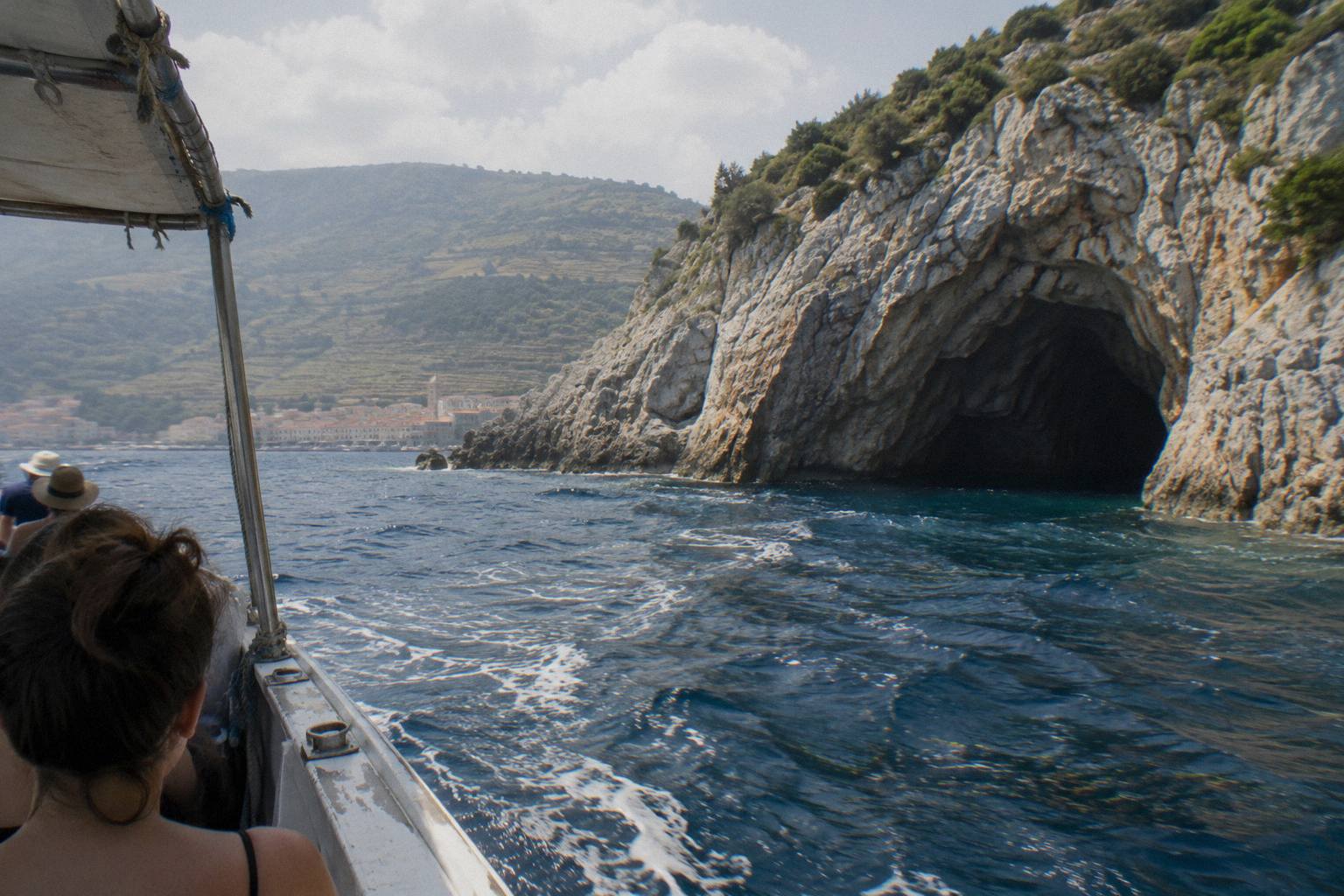
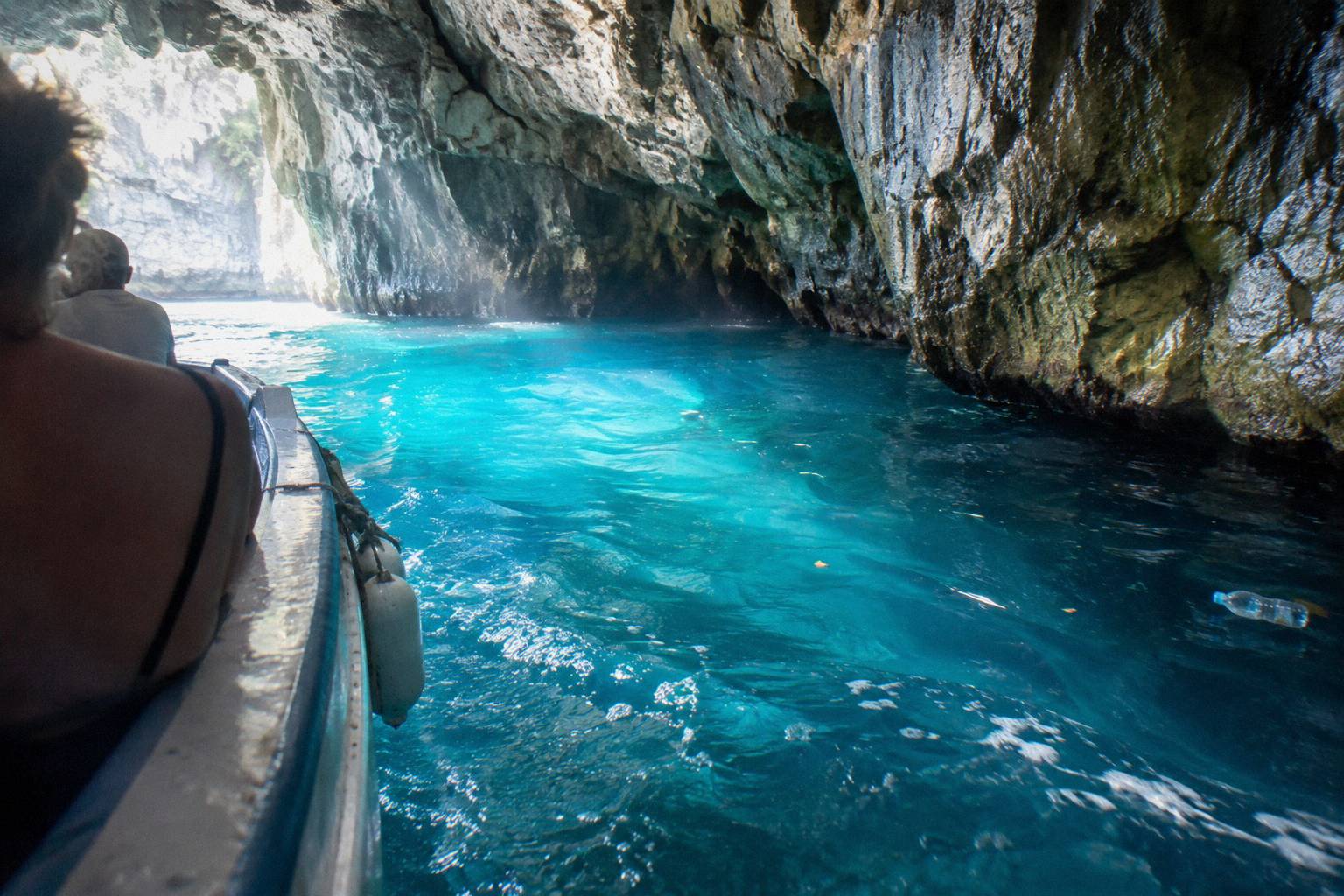
Midday, generally 10:00 to 14:00, season dependent, is when the famous blue glow is most likely. The cave is entered by small boat through an entrance 1.5 m high and 2.4 m wide, after transferring from larger boats at Mezuporat cove, about a 40 minute round trip. Large day tours time their cave stop for this window. Weather can still close the cave regardless of the hour.
The mechanism is worth understanding because it explains why timing matters so much. Sunlight enters Modra špilja through an opening below the waterline and reflects up through the sea inside, which is what produces the blue. When the sun is low, less light makes that path and the effect weakens; when it is high, around the middle of the day, more does. The Komiža tourist board's 10:00 to 14:00 window is the practical translation of that physics, adjusted for season.
So the question to ask before booking any tour is a simple one: when does the itinerary reach Biševo? For the long Split days the answer is usually midday, because the route covers five islands and the cave sits early-to-mid in the schedule. "TOTO Speedboat, 5 Islands" by TOTO TRAVEL (rated 4.9 across 3,414 reviews, from €109 per person) and "Base Fare 5-Island Day" by Valiant d.o.o. (rated 5 across 3,304 reviews, from €78 per person) are both 10 hour days from Split built on the same logic. None of them can promise the light, but their structure gives the light its best chance.
If your heart is set on the midday window and you want flexibility, private options let you set the cave stop yourself: "Private 5 Islands, 10-12 Hours" by Providenca Travel & Charter runs from €1,143 per boat. For the trade-offs, see the guide to private versus group Blue Cave tours.
Which Month Should You Visit The Blue Cave?
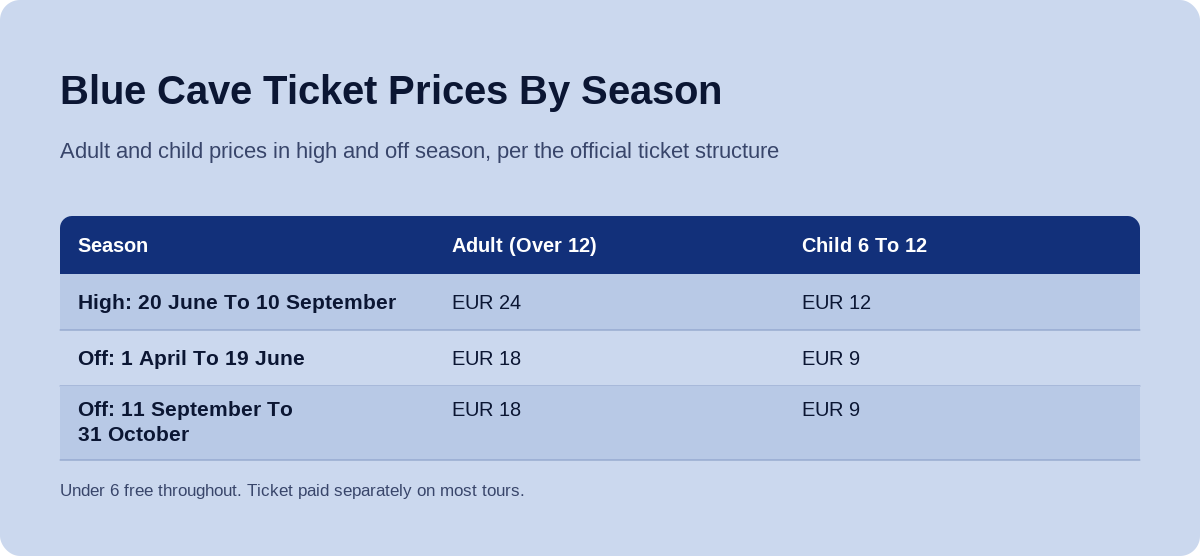
The season runs roughly 1 April to 31 October, following the ticket seasons, with the adult ticket about EUR 18 to 24 depending on dates. Midsummer brings the widest choice of departures and the strongest sun; the shoulder months bring smaller crowds and lower demand. No monthly temperature, sea temperature or crowd figure is officially verified, so treat the outline below as qualitative.
The ticket structure is the clearest official marker of the season's shape. High season runs 20 June to 10 September, with the adult ticket (over 12) at EUR 24 and children 6 to 12 at EUR 12. Off season, 1 April to 19 June and 11 September to 31 October, the adult ticket is EUR 18 and children 6 to 12 pay EUR 9; under 6s are free throughout. The ticket includes the multimedia exhibition at the Visitor Centre on Biševo and is paid separately from most boat-tour prices, on site at Mezuporat or at the concession in Komiža. The full breakdown lives in the guide to the Blue Cave entrance fee.
What does that imply month by month? Qualitatively: April, May, early June, September and October are the shoulder. Departures run, the ticket is cheaper, and the islands are quieter, but the sun sits lower so the light window narrows and shifts. July and August are the peak: maximum departures, highest sun, and the most company at Mezuporat cove, where about 50,000 visitors a year funnel through a transfer point. Late June and early September sit in between, and many regulars treat them as the sweet spot, strong sun without the August crush, though that is reasoning from the season structure rather than a verified crowd figure.
One more seasonal fact: Biševo is a small island with a few dozen year-round residents, and the whole Vis Archipelago around it is listed as a UNESCO Global Geopark. The cave itself has no separate UNESCO status. For background on the island your boat is heading to, see Biševo island. And if your trip sits at the very edges of the season, the guide to Blue Cave closures in bad weather explains what happens when a day is lost.
| Period | Official marker | What it means qualitatively |
|---|---|---|
| 1 April to 19 June | Off-season ticket, adult EUR 18 | Shoulder; lower demand, lower sun angle |
| 20 June to 10 September | High-season ticket, adult EUR 24 | Peak departures; highest sun; busiest transfer point |
| 11 September to 31 October | Off-season ticket, adult EUR 18 | Shoulder; strong sun early, narrowing window late |
| Outside April to October | Season closed | Cave visits do not run on the ticketed schedule |
Whichever month you pick, the cave is visited by small boat after a transfer at Mezuporat, so the mechanics never change, only the light and the company. The concession's own site, bluecave-bisevo.com, carries the current ticket terms and the code of conduct.
How Do Sea Conditions Change The Best Time?
Sea state can override every plan: the cave can close in wind and swell because the small-boat entrance is only 1.5 m high. No official closure threshold is published, and no refund promise is verified. The only real defence is itinerary: book a tour with free cancellation (the listed rows offer a 24 hour window) and keep a spare day in your trip for a rebook.
The entrance is the bottleneck. At 1.5 m high and 2.4 m wide, it admits only small boats, and those boats cannot safely pass in rough conditions, so the concession suspends visits when swell or wind make the entry unsafe. Every tour row on this site offers free cancellation with a 24 hour window, which means a next-morning decision is possible: if the forecast looks poor the evening before, you can cancel without charge and rebook later in your trip. That 24 hour window is the single most useful buffer a planner has here.
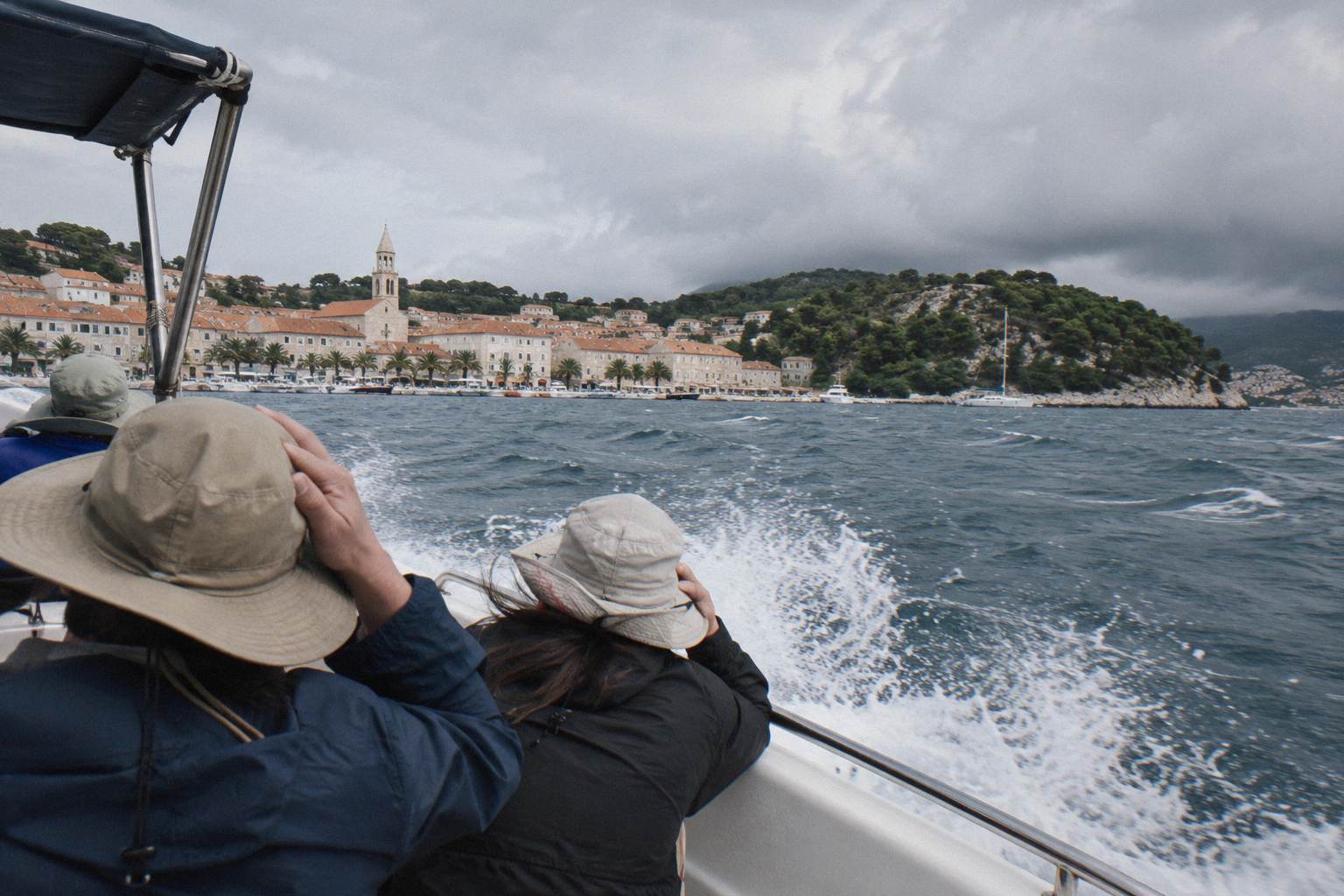
Two structural choices also help. First, a longer holiday beats a perfect forecast: travellers who build in a spare day almost always get their cave visit, while those flying in for a single day sometimes do not. Second, shorter crossings are less exposed: a 7 to 8 hour Hvar departure spends less time at sea than a 10 to 12 hour Split day, which some visitors find calmer. That is not a promise about any given morning, just route geometry.
When conditions cooperate, the whole-day format delivers a full itinerary even if the cave itself is lost for the day: five islands, swim stops, Hvar town. "Mamma Mia Stop, 10-12 Hours" by Providenca Travel & Charter, this site's featured related tour, is a typical example, a guided group day from Split or Trogir from €120 per person where the cave is one stop among five islands. You can check availability for your dates, or compare all options in the guide to boat options from Split.
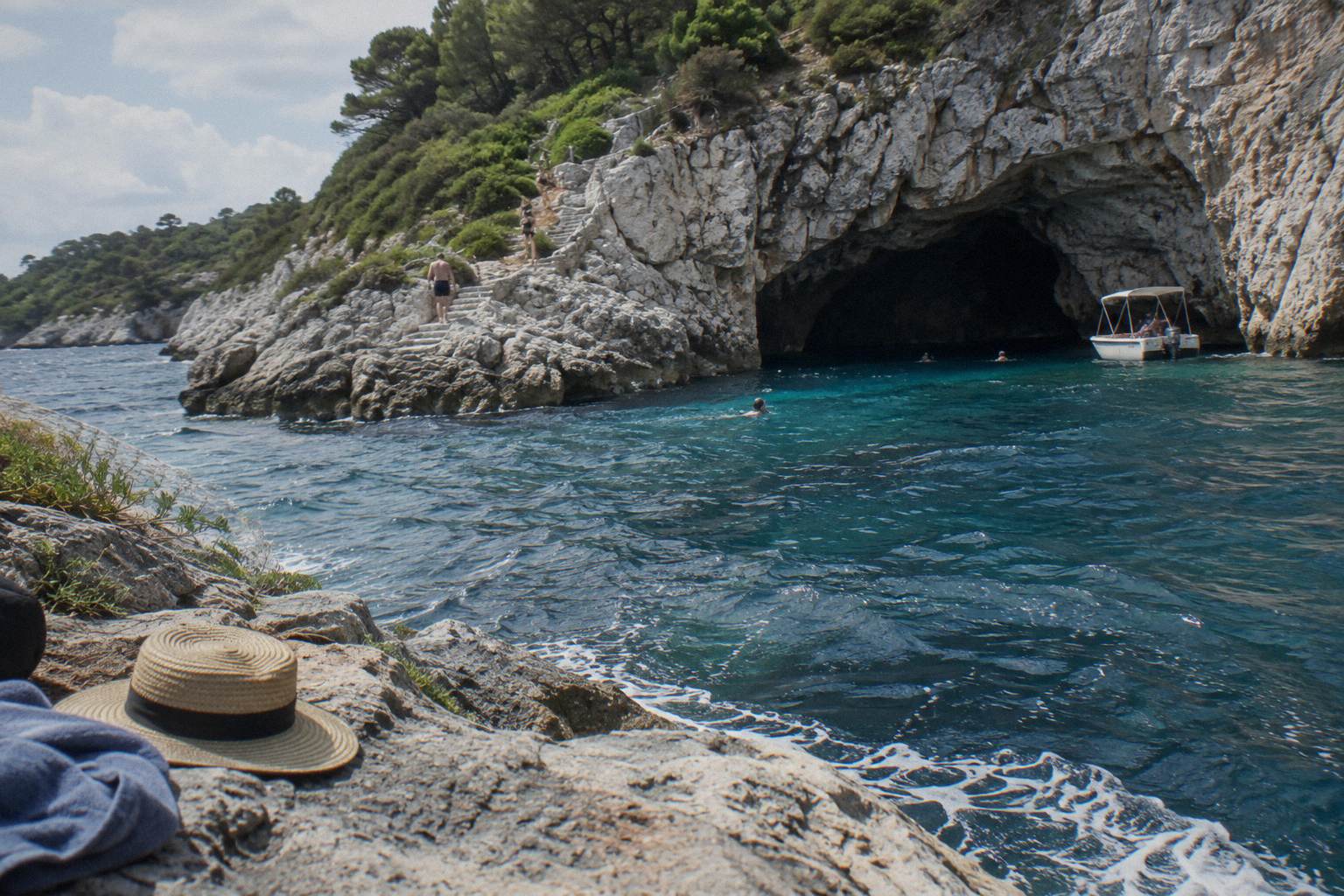
For visitors starting in Dubrovnik, the timing logic differs completely because the cave differs: the Koločep Blue Cave is a swim-in cave on 4 hour Elaphiti trips, with no entry fee charged by the listed tours, and it is far less exposed to the Biševo closure pattern. "Small Group, Sunj Beach, 4 Hours" by Dubrovnik Islands Tours (rated 4.9 across 13,342 reviews, from €70 per person) is the most reviewed tour on this site, and its whole day takes less time than a one-way Split crossing loop.
Which Tours Actually Hit The Light Window?
All the major Biševo itineraries are built to reach the cave near midday, but whole-tour lengths differ: 10 to 12 hours from Split or Trogir, 7 to 8 hours from Hvar, 6 to 6.5 hours from Vis. Shorter days mean less time on the water and an earlier return. Per-person prices among the cheapest Split departures start from €76, and no crossing time is officially verified for any route.
The table below lines up real departures by whole-tour length so you can see what a day costs you in hours. Remember the rule that matters when comparing: booked duration is the whole tour, crossing, stops, swim and lunch included, not time at the cave. The cave stop itself, including the small-boat transfer at Mezuporat, runs about 40 minutes round trip.
| Tour and operator | Departs | Whole-tour length | From (per person) | Rating |
|---|---|---|---|---|
| "Shaded Seats, 10-11 Hours", Valiant d.o.o. | Split | 10 to 11 hours | from €76 | 4.9 across 446 reviews |
| "Base Fare 5-Island Day", Valiant d.o.o. | Split | 10.5 hours | from €78 | 5 across 3,304 reviews |
| "Shaded Luxury Seats", Speed Line | Split | 10 hours 30 minutes | from €79 | 5 across 673 reviews |
| "TOTO Speedboat, 5 Islands", TOTO TRAVEL | Split | 10 hours | from €109 | 4.9 across 3,414 reviews |
| "Mayer Charter 5 Islands Day", Mayer Charter | Split or Trogir | 10 to 11 hours | from €110 | 4.9 across 6,711 reviews |
| "Pakleni Islands, 8 Hours", HvarBoats | Hvar | 8 hours | from €95 | 4.9 across 670 reviews |
| "Vis Island Stop, 7-8 Hours", Kabina Boats | Hvar | 7 to 8 hours | from €100 | 4.9 across 1,135 reviews |
| "From Vis, Shared Speedboat", NEMO - Vis | Vis | 6.5 hours | price on the booking page | no rating printed |
| "Stiniva, Green Cave, Vis", TEUTA Tourist Agency | Vis | 6 hours 15 minutes | from €100 | too few reviews for a star claim |
Two patterns jump out. The Vis departures are the shortest days on the list, at 6 to 6.5 hours, because Biševo sits closest to Vis; if you are staying on Vis, see the guide to Komiža and Vis departures. And the cheapest per-person Biševo tour on this site is the "Shaded Seats, 10-11 Hours" day from Split at from €76, a plain number to beat if budget drives the decision. If you are still weighing the whole Split field, how to choose the best Blue Cave tour from Split walks through it operator by operator.
Every one of these is a guided shared group; the cave ticket, about EUR 18 to 24 for adults by season, is extra on all of them and is paid separately. None of them allows swimming inside the cave, per the concession's code of conduct, which forbids swimming, bathing and diving in the Blue Cave. Swim stops happen elsewhere on the route.
What Trips People Up When Timing A Visit?
Four mistakes cause most disappointing trips: booking a single fixed day with no buffer, confusing whole-tour duration with time at the cave, forgetting the cave ticket is extra, and assuming the Dubrovnik and Biševo caves are the same place. Each one is avoidable at the planning stage, before any money is paid.
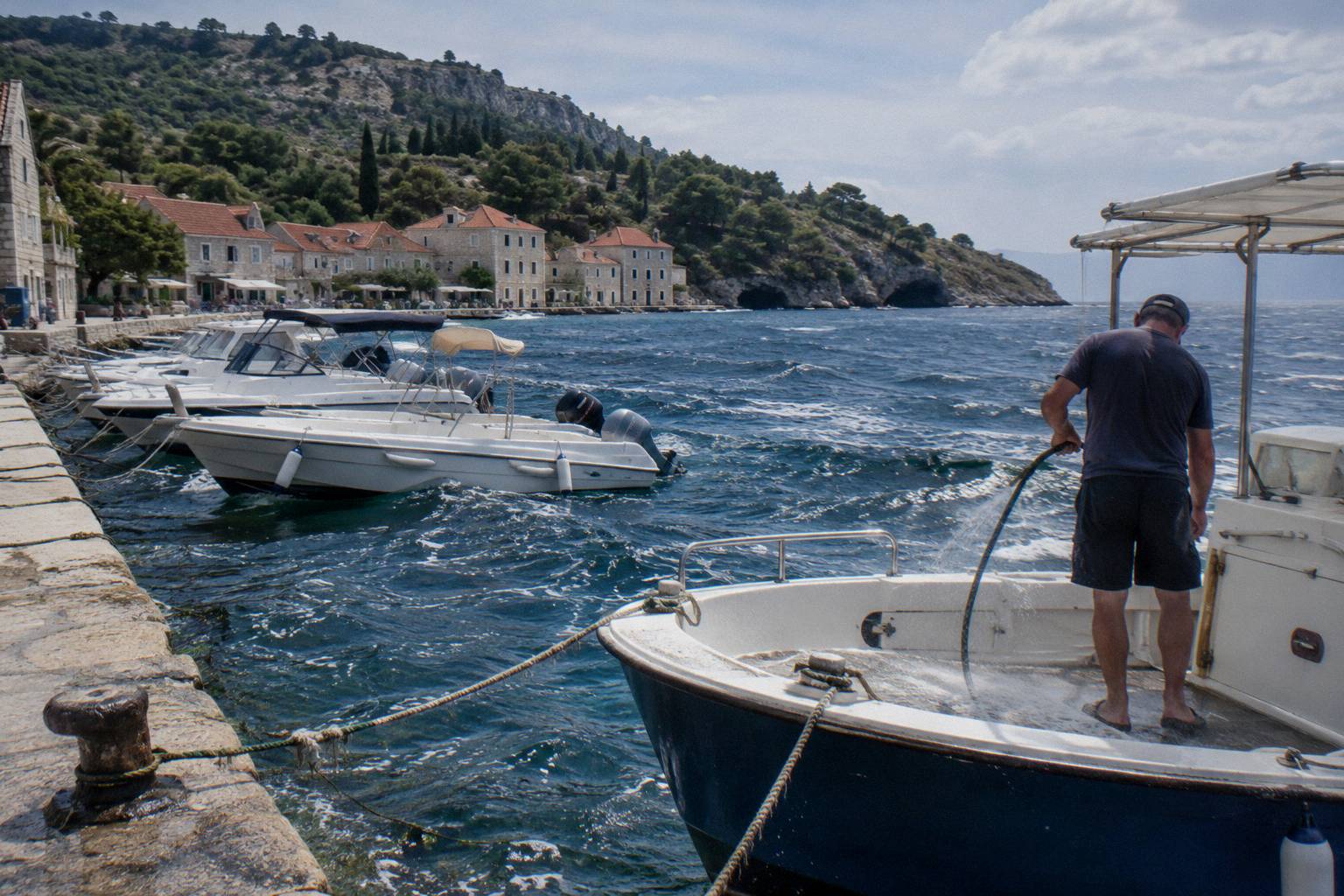
The first mistake is the big one. A traveller with one full day in Split books the cave for that day, the wind picks up overnight, the cave closes and the trip is gone. With a 24 hour free-cancellation window on every listed tour, the fix is structural: keep a spare day, watch the forecast the evening before, and rebook rather than write the trip off. The cave can close in wind and swell on any morning of the season, and roughly 50,000 visitors a year means the rebooking queue after a closure day is real, so flexibility early in your holiday beats flexibility at the end.
The second mistake is arithmetic. A "10 hours" tour is ten hours door to door: crossing, five island stops, swim time, a Hvar town visit, the return. The cave portion is a fraction of that, roughly a 40 minute round trip through Mezuporat plus queueing. Travellers who expect a two hour cave experience inside a ten hour day feel short-changed, while travellers who understand they are booking a five-island day with a cave stop in the middle generally love it. If the cave alone is the goal, the shorter Vis departures concentrate more of the day on Biševo.
The third is budgeting. The from-price on every Biševo tour excludes the cave ticket, about EUR 18 to 24 for adults by season, paid on site at Mezuporat or at the concession in Komiža. The ticket includes the Visitor Centre exhibition on Biševo. Factor it in before comparing a from €76 Split day against a from €95 Hvar day.
The fourth is geography. Searches for "Blue Cave" return two different caves: Biševo's Modra špilja, a ticketed, no-swimming cave reached from Split, Hvar, Brač or Vis, and the Koločep cave near Dubrovnik, a swim-in cave on 4 hour Elaphiti trips with no entry fee charged by the listed tours. If you are staying in Dubrovnik and book a Biševo tour by mistake, no timing advice will save the day. The guide to whether the Blue Cave is closer to Split or Dubrovnik settles that question for your base.
There is a related timing question the list answers well: seat comfort across a long day. Two Split operators sell shaded seats as their headline feature, "Shaded Luxury Seats" by Speed Line (rated 5 across 673 reviews, from €79 per person, 10 hours 30 minutes) and "Shaded Seats, 10-11 Hours" by Valiant d.o.o. (from €76 per person). On a midsummer day with a midday cave stop, shade is part of the timing decision, not a luxury extra; the hours around the light window are the hours the sun is strongest.
Finally, do not over-anchor on the midday window to the point of skipping the cave altogether. The official 10:00 to 14:00 window describes when the light is generally best, season dependent; visits outside it still run, and the transfer at Mezuporat, the Visitor Centre exhibition and the island stops happen regardless. The window tells you where to aim, not where to give up. For the deeper question of whether the whole day justifies itself, see whether the Blue Cave is worth it.
The Vis Archipelago's status as a UNESCO Global Geopark is the last reason timing matters here: the same sea state that closes the cave shapes every swim stop on the route, and the protected status is why the visits stay small-boat and low-impact. Plan the hour, respect the sea, and the day delivers even when the cave sits behind its threshold.
Common Questions About Timing A Blue Cave Visit
What Time Of Day Is The Blue Cave At Its Bluest?
Generally between 10:00 and 14:00, season dependent, according to the official Komiža tourist board page. Whole-day tours from Split and Hvar are built to reach the cave near midday. No operator can promise the light or colour on any given day.
What Month Is Best For Visiting The Blue Cave?
The season runs roughly 1 April to 31 October. July and August bring the strongest sun and the most departures; late June and early September sit between peak and shoulder; spring and autumn months have cheaper tickets (EUR 18 adult) and lower demand. No monthly crowd or temperature figures are officially verified.
What Happens If The Cave Closes On My Tour Day?
The cave can close in wind and swell because the small-boat entrance is only 1.5 m high. Every tour listed on this site carries free cancellation with a 24 hour window, so you can cancel the evening before and rebook. Most long itineraries continue to their other island stops. No refund promise for a partial day is verified.
Is The Cave Ticket Included In The Tour Price?
No. On the Biševo tours the ticket is extra: about EUR 18 to 24 for adults, season dependent, paid on site at Mezuporat or at the concession in Komiža, and it includes the Visitor Centre exhibition on Biševo. The Dubrovnik-area Koločep cave is a different cave with no entry fee charged by the listed tours.
How Long Is A Typical Blue Cave Tour Day?
Whole-tour length is 10 to 12 hours from Split or Trogir, 7 to 8 hours from Hvar, and 6 to 6.5 hours from Vis. That covers the crossing, island stops and swim time; the cave visit itself, including the small-boat transfer at Mezuporat, runs about 40 minutes round trip.
Can I Visit The Blue Cave Without A Tour?
Visits run through the concession's small boats from Mezuporat cove, and no ferry timetable or independent-access route is verified here. In practice, nearly everyone arrives on a tour or a private charter. The page on whether you can visit the Blue Cave without a tour covers the question in full.