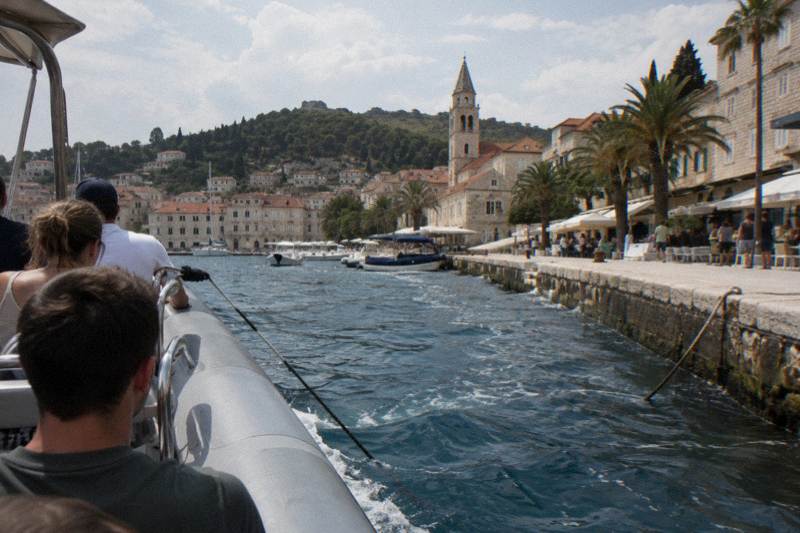
Where Is The Blue Cave In Croatia? Biševo, Vis And The Map
The Blue Cave is on the east side of Biševo island, in Balun bay, 4.5 nautical miles (8.3 km) from Komiža on the island of Vis. It is not near Dubrovnik, and it is not the cave the Elaphiti boat tours visit.
Short answer
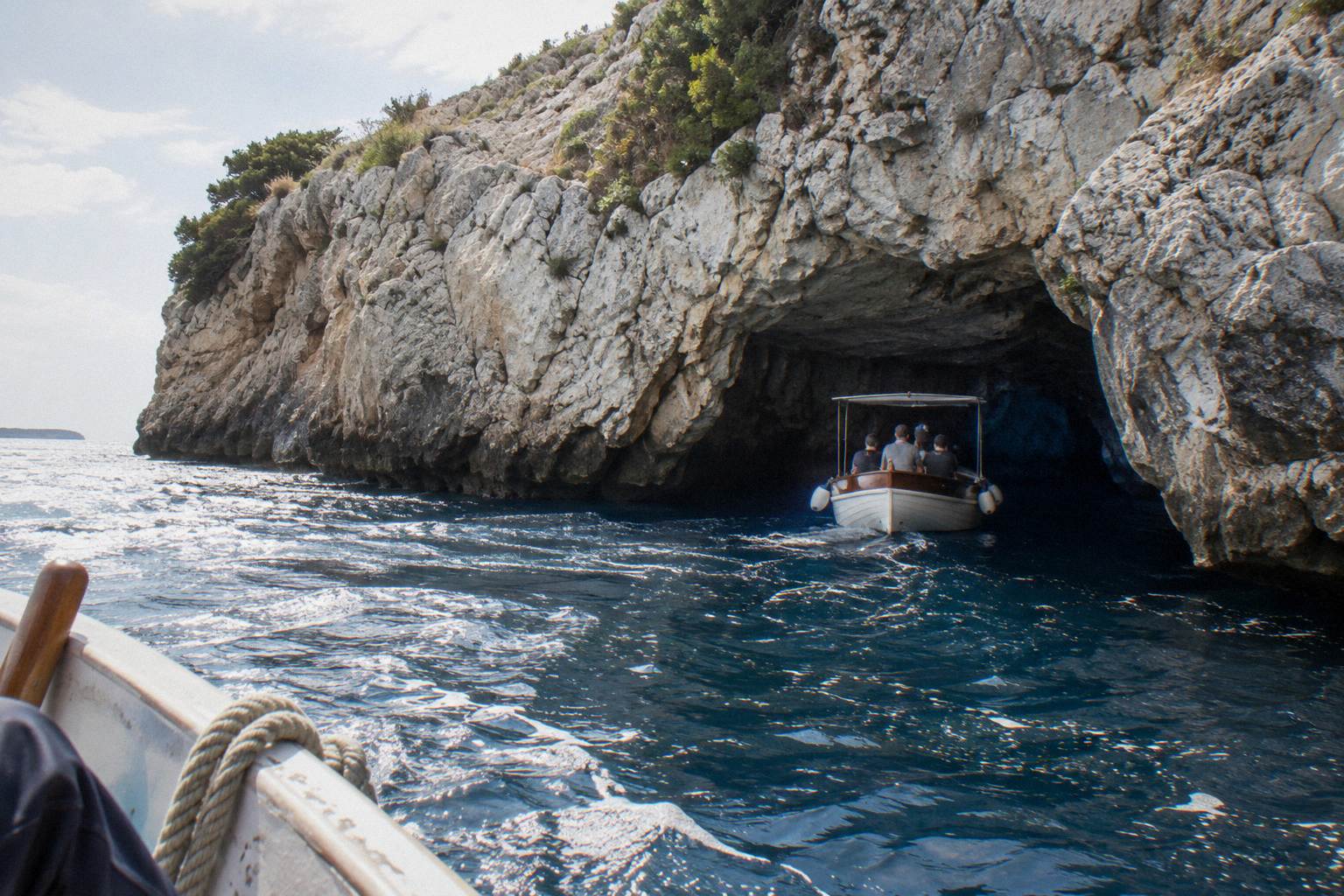
The Blue Cave (Modra špilja) is on the east side of Biševo, a small island 4.5 nautical miles (8.3 km) southwest of Komiža on Vis, in central Dalmatia. It measures 24 m long and 10 to 12 m wide, receives about 50,000 visitors a year, and is reached by tours from Split, Hvar and Vis, with tickets about EUR 18 to 24 for adults by season.
This guide is part of the attraction hub on Blue Cave Tour Croatia; for the mechanics of a visit, see how the Biševo Blue Cave visit works.
| Quick Fact | Detail |
|---|---|
| Cave name | Modra špilja (the Blue Cave) |
| Location | East side of Biševo island, Balun bay, Vis archipelago |
| Distance from Komiža (Vis) | 4.5 nautical miles (8.3 km) |
| Size | 10 to 12 m wide, 24 m long |
| Entrance | 1.5 m high, 2.4 m wide, entered by small boat |
| Discovered | 1884, by Baron Eugen von Ransonet |
| Visitors | About 50,000 per year |
| Season | Roughly April to October |
| Adult ticket | About EUR 18 to 24, season dependent |
| Swimming inside | Forbidden |
Where Is The Blue Cave In Croatia Exactly?
The Blue Cave, Modra špilja, is on the east coast of Biševo island, in Balun bay, 4.5 nautical miles (8.3 km) from Komiža, the fishing town on the western side of Vis island. Biševo is a small island in the Vis archipelago, off central Dalmatia, roughly opposite Split. Baron Eugen von Ransonet opened the cave to the public in 1884, and today it receives about 50,000 visitors a year.
That single paragraph answers the map question, but the details matter because "Blue Cave" is a name that trips up a surprising number of travellers. On a map of Croatia, find Split on the mainland coast, then look southwest into the open sea. The island of Vis is the furthest inhabited island from the mainland in this stretch of Dalmatia. Komiža sits at the foot of Mount Hum on Vis's western coast, and Biševo lies just beyond it to the southwest, a low island of vineyards and collapsed caves. The Blue Cave sits on Biševo's eastern shore, facing back toward Vis. The official Komiža tourist board page for Modra špilja carries the cave's location, dimensions and visitor figures.
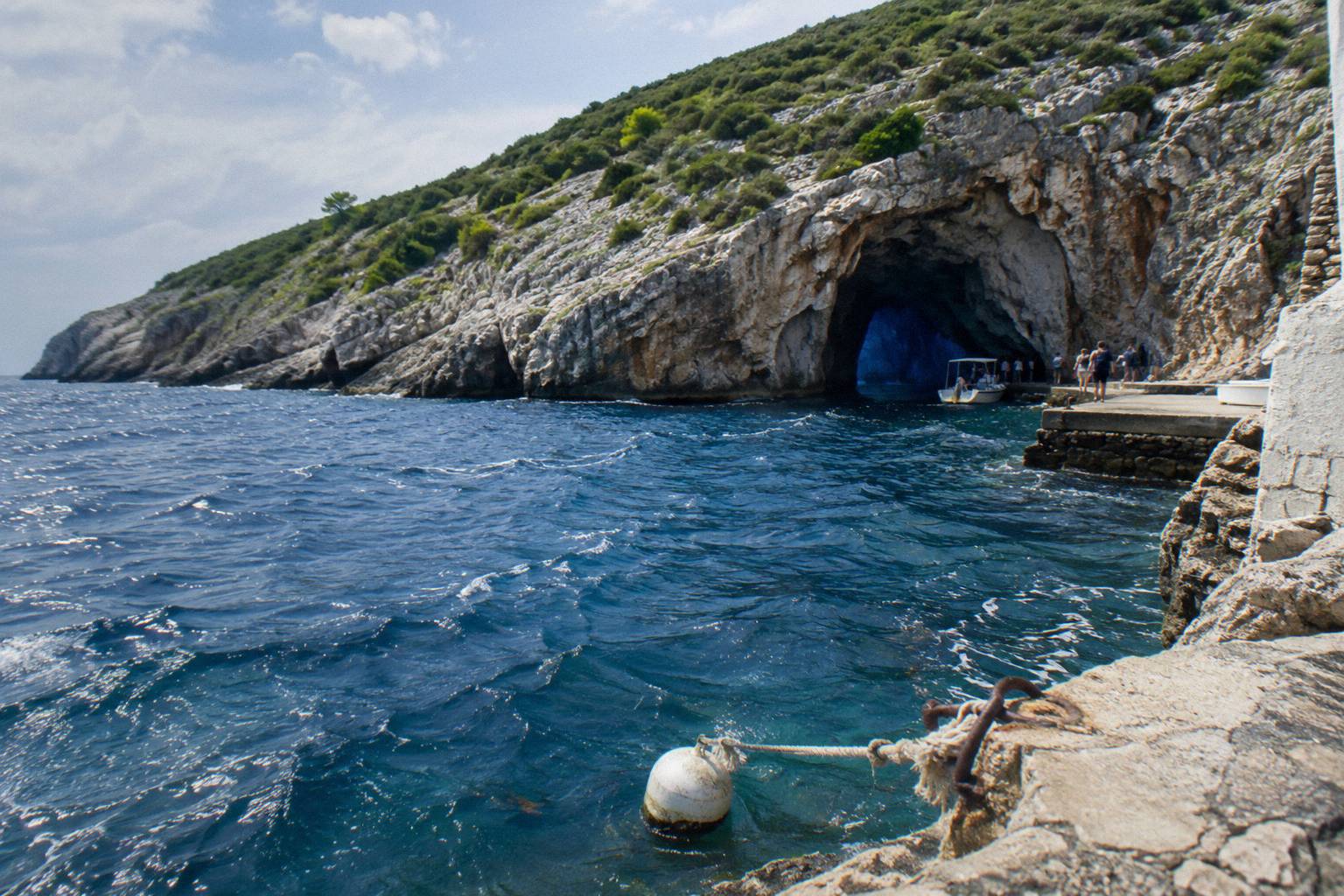
Biševo itself is tiny, and it has almost no tourism infrastructure of its own beyond the cave operation and a handful of hamlets. That is why every visit is a boat visit. There is no ferry-and-walk option to the cave entrance, no road on Biševo that leads to it, and no way to buy a ticket on the mainland that includes the crossing. You arrive by boat, you transfer at Mezuporat cove, and you enter the cave in one of the concession's small boats. The concession's own site, bluecave-bisevo.com, describes this transfer arrangement and the code of conduct for the cave.
If you are the kind of planner who wants the geography settled before anything else, the honest summary is this: the Blue Cave is a Vis archipelago attraction. Split, Trogir, Hvar, Brač and Vis are the departure bases the listed tours actually use, and Dubrovnik is not among them. If a boat trip from Dubrovnik advertises a "Blue Cave," it means the other cave, covered further down this page.
Biševo, Vis And The Map: How The Islands Fit Together
Vis is the parent island, holding the towns, hotels and ferry links, while small Biševo sits 4.5 nautical miles (8.3 km) across open sea from Komiža harbour as the day-trip destination. The Blue Cave lies on Biševo's eastern side in Balun bay, entered by small boat through an opening just 1.5 m high and 2.4 m wide.
Understanding the hierarchy of these islands saves you real planning time. Vis is where you sleep, eat and swim if you base yourself locally. Komiža, on Vis, is the town nearest the cave, and it is where the cave concession, Nautički centar Komiža, operates from. Biševo is the object of the trip. Most of the listed tours do not start on Vis at all: the big group days run from Split or Trogir, cross to the Vis archipelago, visit the cave, and then build a full day around Hvar, the Pakleni islands or other stops before returning.
The Vis archipelago has protected status as a whole: it is listed as a UNESCO Global Geopark, though the cave itself has no separate UNESCO status. Biševo is also reported to have been protected since 1951 as a geomorphological monument of nature, one of the older nature protections on the Croatian coast. For background on the parent island, see the Vis island overview.
For a reader still choosing a base, the map divides neatly into three rings. Split and Trogir form the outer ring: the biggest city, the most tour departures, the longest days (typically 10 to 12 hours booked duration). Hvar town and Bol on Brač form the middle ring: shorter crossings and days of roughly 7 to 10 hours. Vis itself, mainly Komiža, is the inner ring: the shortest possible approach, with days around 6.5 hours. For the full breakdown, see the guide to departures from Komiža and Vis.
Three representative trips show the spread of options from this middle ring outward:
To put numbers on those three: "Vis Island Stop, 7-8 Hours" by Kabina Boats, Hvar Boat Tours is a guided group trip from Hvar rated 4.9 across 1,135 reviews, from €100 per person, with free cancellation within a 24 hour window. "Mamma Mia Stop, 10-12 Hours" by Providenca Travel & Charter runs from Split or Trogir, is rated 4.8 across 8,983 reviews and costs from €120 per person, also with a 24 hour cancellation window. "From Vis, Shared Speedboat" by NEMO, Vis is a guided group day from Vis with a booked duration of 6.5 hours; its price is on the booking page. All three visit the Biševo Blue Cave, with the cave ticket paid separately, and none allow swimming inside the cave.
Which Blue Cave Is Which? Biševo Versus The Dubrovnik-Area Cave
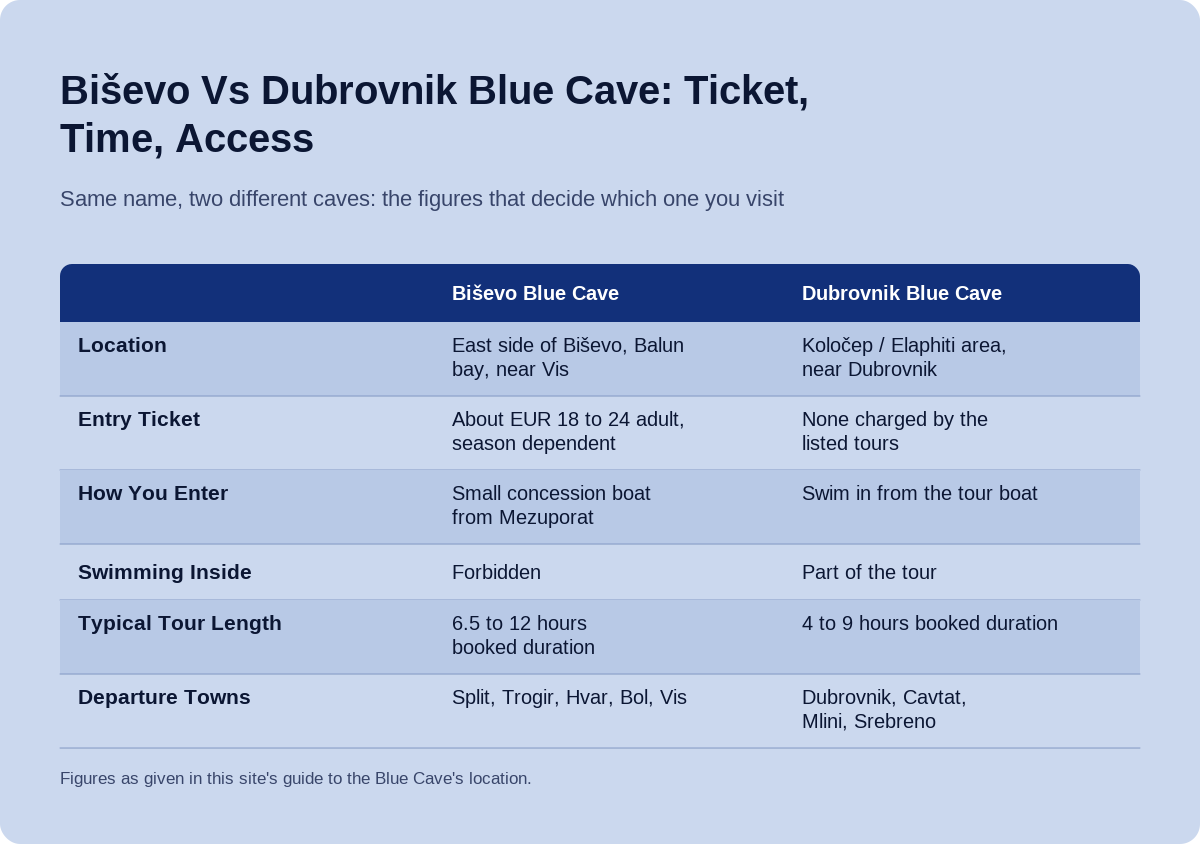
There are two different caves marketed as the Blue Cave in Croatia. The famous one is Modra špilja on Biševo, near Vis, entered by small boat with an entry ticket of about EUR 18 to 24 for adults by season, and swimming inside is forbidden. The other is a swim-in sea cave near Koločep and the Elaphiti islands outside Dubrovnik, which the listed Dubrovnik tours visit without charging any entry ticket. No single tour visits both.
This is the single most consequential fact on this page, because booking the wrong cave is the most common expensive mistake in Blue Cave planning. A traveller based in Dubrovnik who searches for "Blue Cave" will find a wall of 4 hour boat tours from Dubrovnik's old town harbour. Those tours are real, well reviewed and enjoyable, but they visit the Elaphiti-area cave, not Biševo. The Biševo cave is a full day trip from Split or a half day from Hvar or Vis, and there is no Dubrovnik departure to it on any of the listed tours.
The experience differs too, and not just the geography. At Biševo, large boats stop at Mezuporat cove and visitors transfer to the concession's small boats for the roughly 40 minute round trip into the cave; the code of conduct forbids swimming, bathing and diving inside. At the Dubrovnik-area cave, the listed tours swim in, and no entry fee is charged by those tours. One is a ticketed natural monument; the other is a swim stop on an island-hopping morning.
| Biševo Blue Cave (Modra špilja) | Dubrovnik-Area Blue Cave | |
|---|---|---|
| Location | East side of Biševo, Balun bay, near Vis | Koločep / Elaphiti area, near Dubrovnik |
| Entry ticket | About EUR 18 to 24 adult, season dependent | None charged by the listed tours |
| How you enter | Small concession boat from Mezuporat | Swim in from the tour boat |
| Swimming inside | Forbidden | Part of the tour |
| Typical tour length | 6.5 to 12 hours booked duration | 4 to 9 hours booked duration |
| Departure towns | Split, Trogir, Hvar, Bol, Vis | Dubrovnik, Cavtat, Mlini, Srebreno |
On the Dubrovnik side, the best documented option is "Small Group, Sunj Beach, 4 Hours" by Dubrovnik Islands Tours, a guided group trip rated 4.9 across 13,342 reviews, from €70 per person, with free cancellation within 24 hours. It is the most reviewed tour covered on this site, and it visits the Dubrovnik-area cave, not Biševo. For a full comparison of the two, see is the Blue Cave closer to Split or Dubrovnik.
If the Biševo cave is the one you came for, the Hvar departure below is the shortest way to stand at its entrance.
How Do You Get To The Blue Cave? Departure Towns And Tours
You reach the Biševo Blue Cave only by boat, on a guided group tour or a private charter, from Split, Trogir, Hvar, Bol on Brač, or Vis. Split and Trogir run the longest days, 10 to 12 hours booked duration, from roughly €76 to €174 per person depending on the tour. Hvar and Brač run days of about 7 to 10 hours, and Vis has the shortest approach. The cave ticket is paid separately on all of these tours.
Start with the closest base and work outward. From Vis, "From Vis, Shared Speedboat" by NEMO, Vis is a guided group tour with a booked duration of 6.5 hours; its price is on the booking page. From Hvar, the options multiply: "Pakleni Islands, 8 Hours" by HvarBoats is rated 4.9 across 670 reviews, from €95 per person, and pairs the cave with the Pakleni islands. "Green Cave Included, 5 Islands" by Gajeta Agency runs 7.5 hours from Hvar town, rated 4.8 across 1,010 reviews, price on the booking page. For the full local picture, see Blue Cave trips from Hvar town.
From Split and Trogir, the choice is widest. "TOTO Speedboat, 5 Islands" by TOTO TRAVEL, Boat Trip Adventures is rated 4.9 across 3,414 reviews, from €109 per person, 10 hours. "Shaded Seats, 10-11 Hours" by Valiant d.o.o. is the cheapest per-person Biševo tour at from €76 per person, rated 4.9 across 446 reviews. "Mayer Charter 5 Islands Day" is rated 4.9 across 6,711 reviews, from €110 per person, departing Split or Trogir. At the top end, "Premium Boat, Hvar And Vis" by Seayou runs from Bol on Brač at from €174 per person, the most expensive per-person tour covered here, rated 4.9 across 566 reviews. All carry free cancellation within a 24 hour window.
Private options exist at every base and are priced per boat or group, never per person. "Private 5 Islands, 10-12 Hours" by Providenca Travel & Charter costs from €1,143 per boat from Split; "Private From Hvar Town" by HvarCruise costs from €900 per boat; "Private Hvar, Vis And Pakleni" by Mario Rent costs from €750 per boat. A private charter does not change the geography or the cave rules; it changes only who shares the boat. The comparison guide private versus group Blue Cave tours walks through the trade-off.
| Departure | Example Tour (Operator) | Duration | From | Rating |
|---|---|---|---|---|
| Vis | From Vis, Shared Speedboat (NEMO, Vis) | 6.5 hours | Price on booking page | 5 across 180 reviews |
| Hvar | Vis Island Stop, 7-8 Hours (Kabina Boats) | 7 to 8 hours | €100 | 4.9 across 1,135 reviews |
| Hvar | Pakleni Islands, 8 Hours (HvarBoats) | 8 hours | €95 | 4.9 across 670 reviews |
| Split | Shaded Seats, 10-11 Hours (Valiant d.o.o.) | 10 to 11 hours | €76 | 4.9 across 446 reviews |
| Split or Trogir | Mayer Charter 5 Islands Day | 10 to 11 hours | €110 | 4.9 across 6,711 reviews |
| Split or Trogir | Mamma Mia Stop, 10-12 Hours (Providenca) | 10 to 12 hours | €120 | 4.8 across 8,983 reviews |
| Bol, Brač | Premium Boat, Hvar And Vis (Seayou) | 10 hours | €174 | 4.9 across 566 reviews |
The TOTO Speedboat tile above is a solid middle-of-the-road Split choice: 4.9 across 3,414 reviews puts it among the strongest review pools from Split, and its 10 hour booked duration is typical for the route. Compare the field in how to choose the best Blue Cave tour from Split.
What Is The Blue Cave Like Inside?
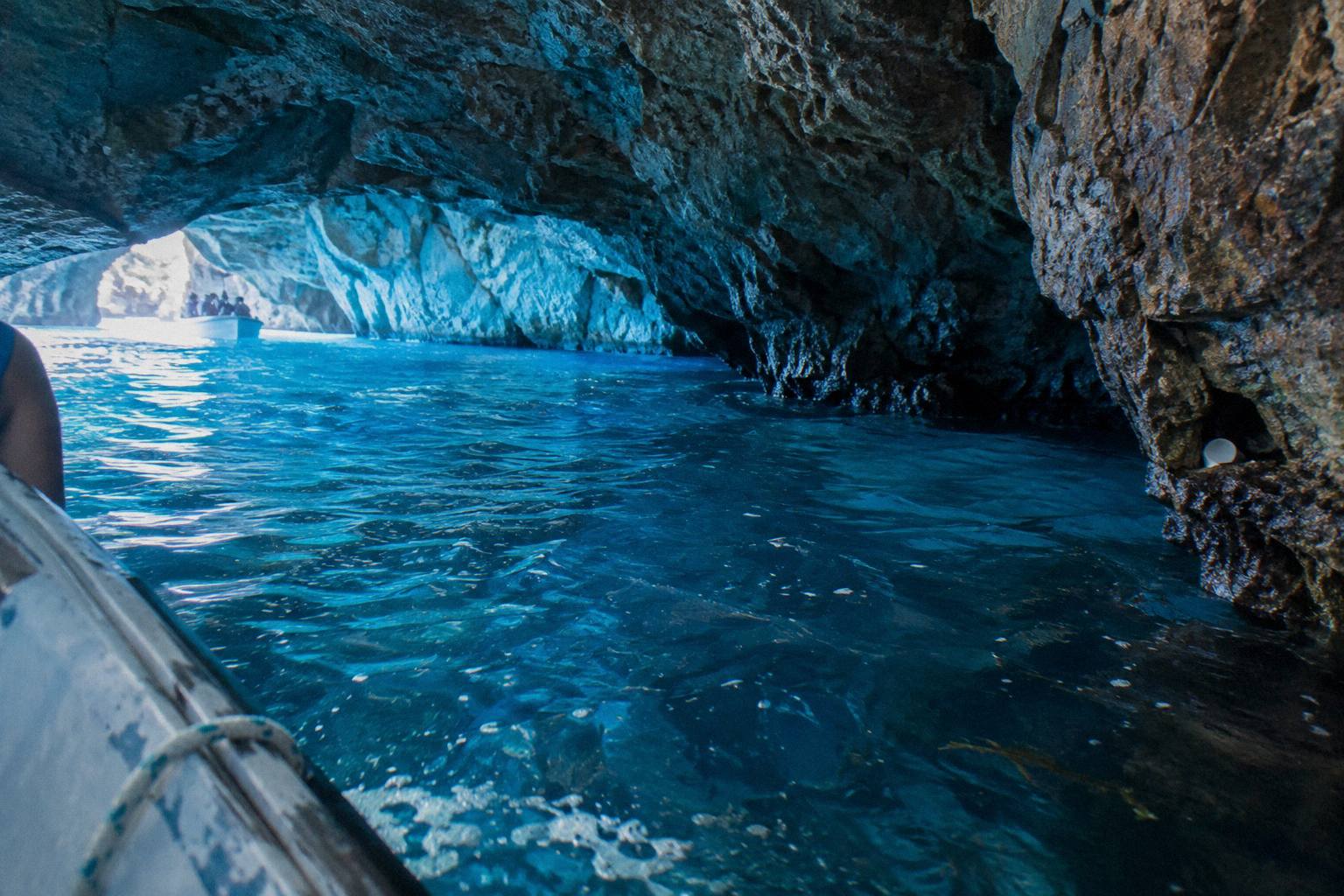
The cave is a single chamber 24 m long and 10 to 12 m wide, entered through an opening just 1.5 m high and 2.4 m wide, small enough that visitors lie back in a low boat to pass through. Sunlight entering through an underwater opening gives the water its blue glow, best generally between 10:00 and 14:00, season dependent. About 50,000 people visit each year, and the cave can close in wind and swell.
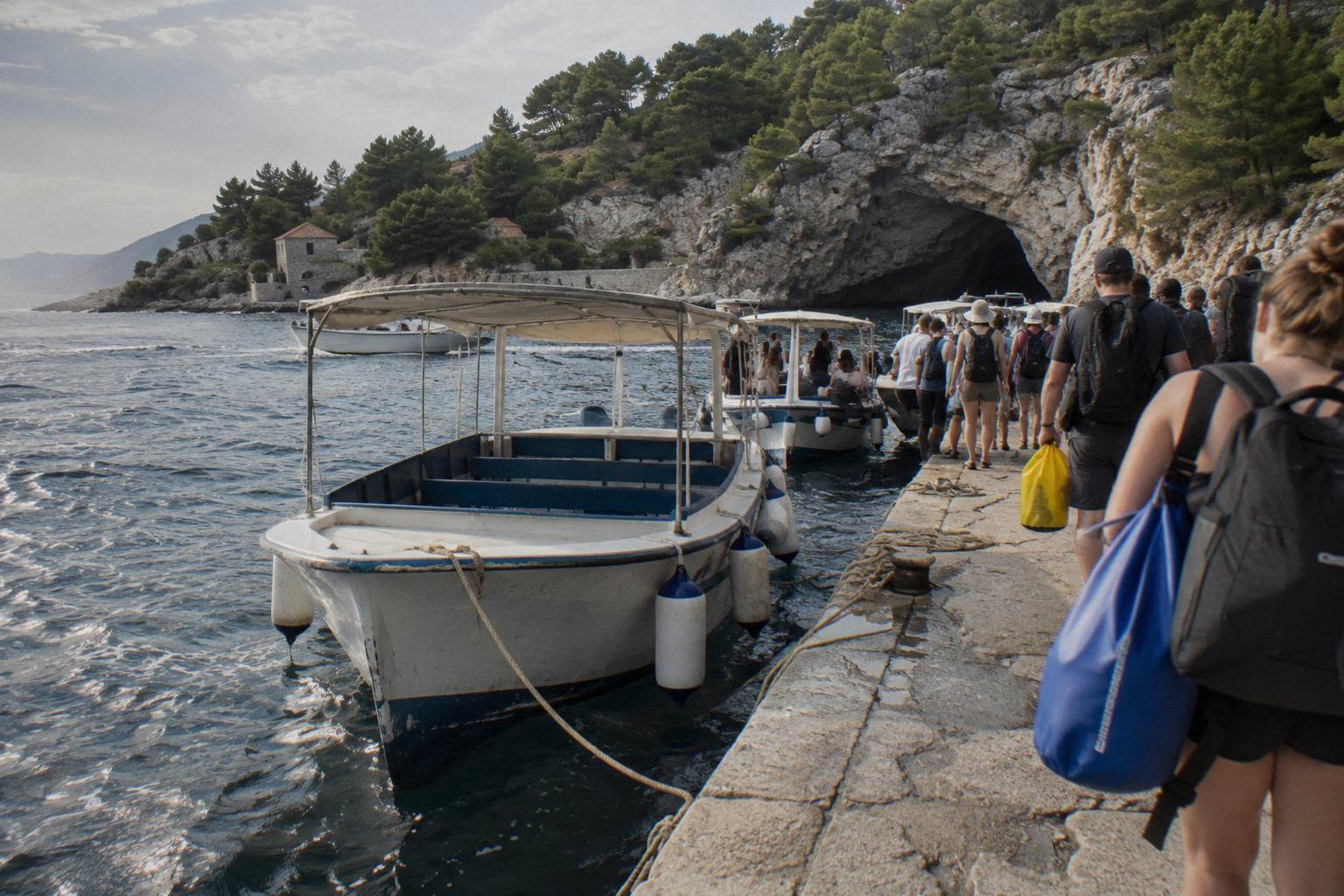
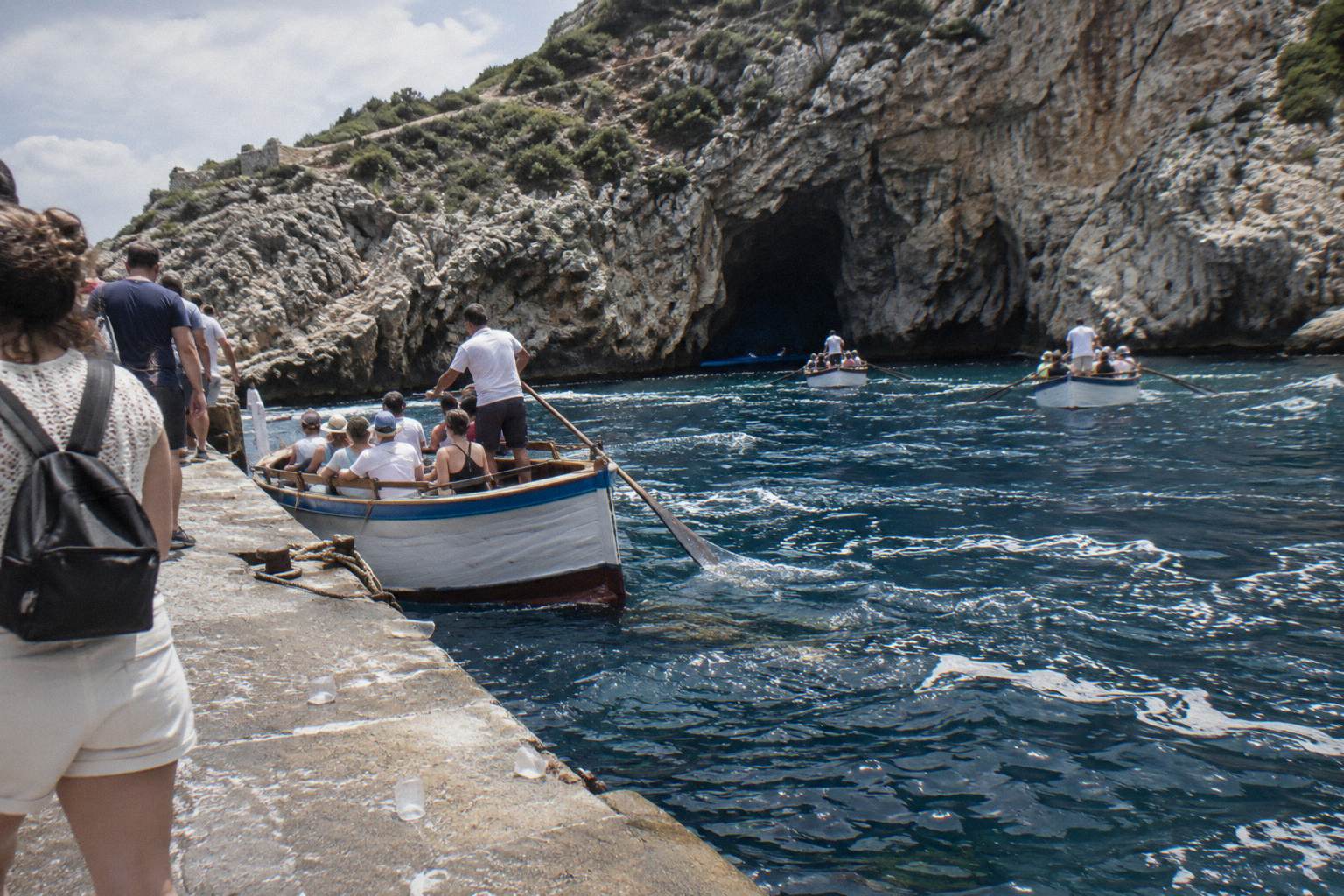
The mechanics are fixed by the geometry. The entrance is too low and narrow for anything but a small boat, so the flow of visitors is managed entirely by the concession: larger tour boats anchor at Mezuporat cove on Biševo, and visitors transfer into the concession's boats for the roughly 40 minute round trip. Inside, the chamber is short; visits are brief by design, because the same small boats run a constant shuttle through the season, which runs roughly April to October.
The colour depends on sun angle and conditions, which is why the official guidance points to the middle of the day. Nobody can promise a particular shade on a particular day, and no tour operator claims to. Equally, no operator can override the sea: the cave can close in wind and swell when the small-boat entry becomes unsafe. When that happens, tours adjust their route, and the question of refunds belongs to each operator's own terms on the booking page. The guide on Blue Cave closures and bad weather covers the practical consequences.
The ticket is the other fixed piece. Adults pay about EUR 18 to 24 depending on the season (children 6 to 12 pay EUR 9 to 12, under 6 free), and the ticket includes the multimedia exhibition at the Visitor Centre on Biševo. It is paid on site or at the concession centre in Komiža, separately from the tour fare, on every tour listed on this page. The full breakdown lives in the Blue Cave entrance fee guide.
One more geographic note that connects the cave to its island: Biševo is a karst island, and the Blue Cave is only its most famous hollow. The island overview on Wikipedia's Biševo page covers the rest of its geography, and the neighbouring island of Vis has its own draws, covered in is Vis island worth it for the Blue Cave and Mamma Mia.
Mistakes That Trip People Up When Locating The Cave
The four most common planning errors are booking the Dubrovnik-area Blue Cave while meaning Biševo, underestimating the length of Split and Trogir days (10 to 12 hours), forgetting that the cave ticket of about EUR 18 to 24 is paid separately, and assuming a visit is guaranteed when the cave can close in wind and swell. Each is avoidable with the map and figures above.
The first mistake is the expensive one. Dubrovnik is Croatia's second most visited destination, and its harbour is full of Blue Cave signs. A traveller who books one of those 4 hour trips believing they are seeing Modra špilja has bought a completely different experience. Check the departure town on the booking page: Biševo tours depart Split, Trogir, Hvar, Bol on Brač or Vis, never Dubrovnik.
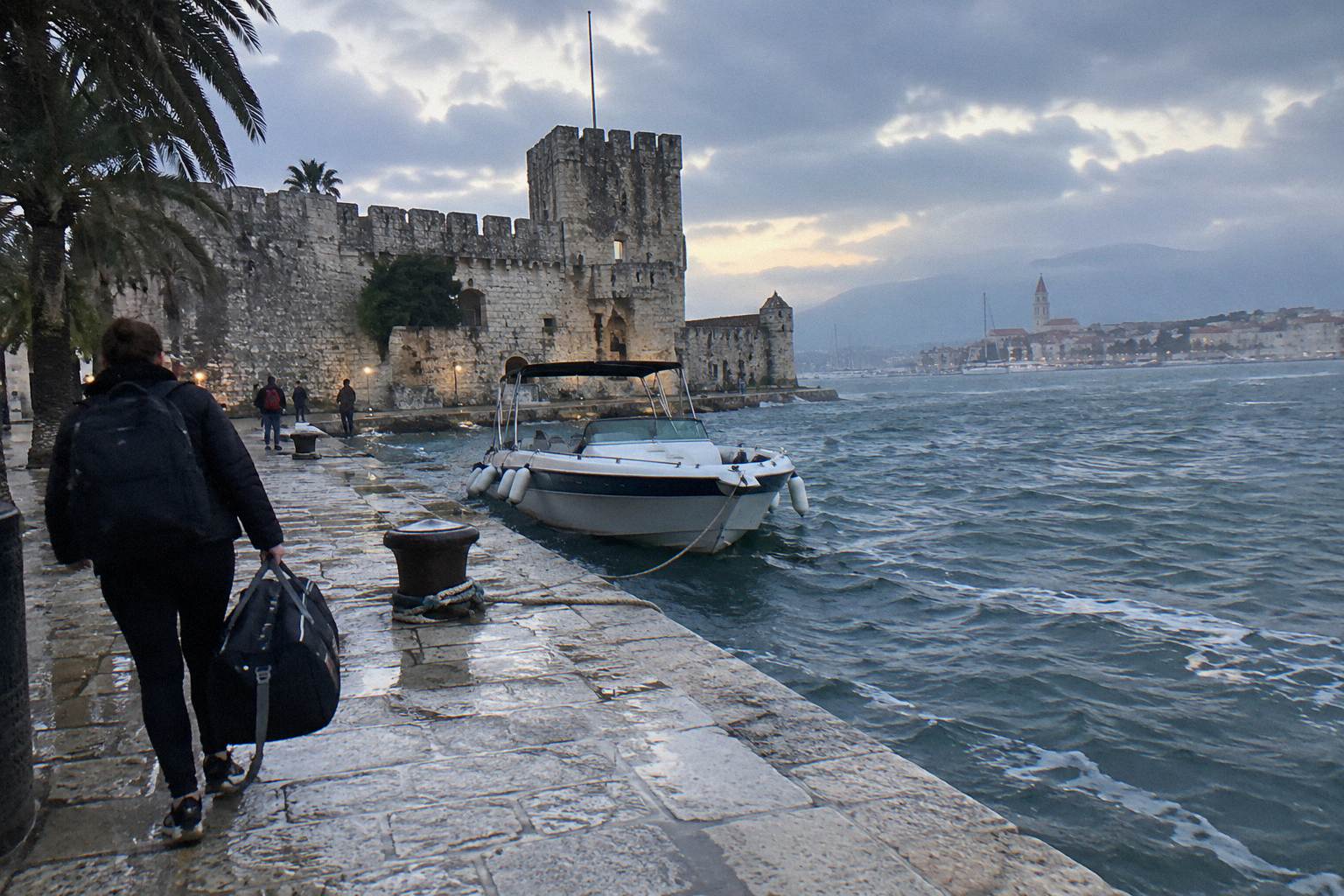
The second mistake is packing a Split day into a light schedule. A 10 to 12 hour booked duration means most of your day, and the duration covers the whole outing: the crossing, the cave, the island stops, the swim stops and any lunch. It is not time at the cave, and it is not a crossing time. If your Split itinerary only has a free morning, choose a shorter tour entirely or base yourself in Hvar or Vis instead.
The third mistake is budgeting. The headline fare on any Biševo tour excludes the cave ticket, about EUR 18 to 24 for adults by season, paid on site or at the concession in Komiža. Two adults on a from-€76 tour should mentally add two adult tickets to the day. The fourth mistake is assuming certainty: best light is generally 10:00 to 14:00, season dependent, and wind or swell can close the cave outright. Book with the 24 hour free cancellation window most listed tours carry, and keep a flexible day.
For families weighing all of this, the "Mayer Charter 5 Islands Day" above, rated 4.9 across 6,711 reviews from €110 per person, is one of the most reviewed Split-or-Trogir options and a common default for a first visit. The paired planning read is what to bring on a Blue Cave boat trip, and if the swim-in cave sounds more like your kind of morning, start with the Koločep and Elaphiti trip guide.
A final orientation summary: Biševo for the ticketed cave visited by small boat from Split, Trogir, Hvar, Brač or Vis; the Elaphiti-area cave for a swim-in morning from Dubrovnik. Same name, different islands, different rules. The three tiles below cover the closest base (Vis), the full-day classic from Split, and the middle option from Hvar.
Whichever base you choose, check the departure town on the booking page before you pay: it is the one detail that tells you which Blue Cave you are actually going to see.
Common Questions About Where The Blue Cave Is In Croatia
Where Is The Blue Cave In Croatia?
The Blue Cave (Modra špilja) is on the east side of Biševo island, in Balun bay, 4.5 nautical miles (8.3 km) from Komiža on the island of Vis, off the central Dalmatian coast of Croatia. It is reached by boat tours from Split, Trogir, Hvar, Bol on Brač and Vis.
Is The Blue Cave Near Dubrovnik?
No. The famous Blue Cave is on Biševo, near Vis and Split, in central Dalmatia. Boat tours from Dubrovnik that advertise a Blue Cave visit a different cave in the Koločep and Elaphiti area, which is a swim-in cave with no entry ticket on the listed tours.
Which Island Is The Blue Cave On?
Biševo, a small island southwest of Vis. The nearest town of any size is Komiža on Vis, 4.5 nautical miles (8.3 km) away, where the cave concession is based. The cave sits on Biševo's eastern shore in Balun bay.
What Is The Closest City To The Blue Cave?
Split is the closest large city and the busiest departure point, with tours of 10 to 12 hours booked duration. The closest bases overall are Hvar town and Vis island, which run shorter days of roughly 6.5 to 8 hours. Dubrovnik is not a departure point for the Biševo cave.
Can You Swim In The Blue Cave On Biševo?
No. Swimming, bathing and diving inside the Biševo Blue Cave are forbidden under the concession's code of conduct. Visitors enter by small boat after transferring at Mezuporat cove. The Dubrovnik-area Blue Cave is the one where listed tours swim in.
When Is The Blue Cave Open?
The season runs roughly April to October, following the ticket seasons. Best light inside the cave is generally 10:00 to 14:00, season dependent, and the cave can close in wind and swell when the small-boat entry is unsafe.